
The time has come to put thought and consideration into how my FMP may be portrayed. The work has come to represent landforms in an abstract nature and the method of their transmission must be befitting. Here I intend to consider the dissemination of the work of others and to develop a plan to proceed with.
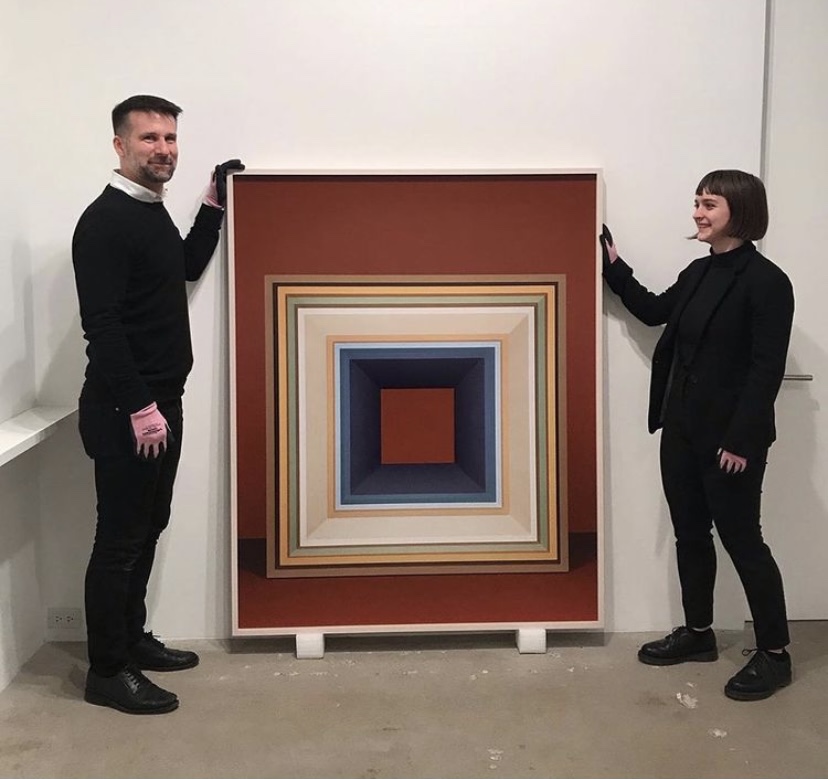
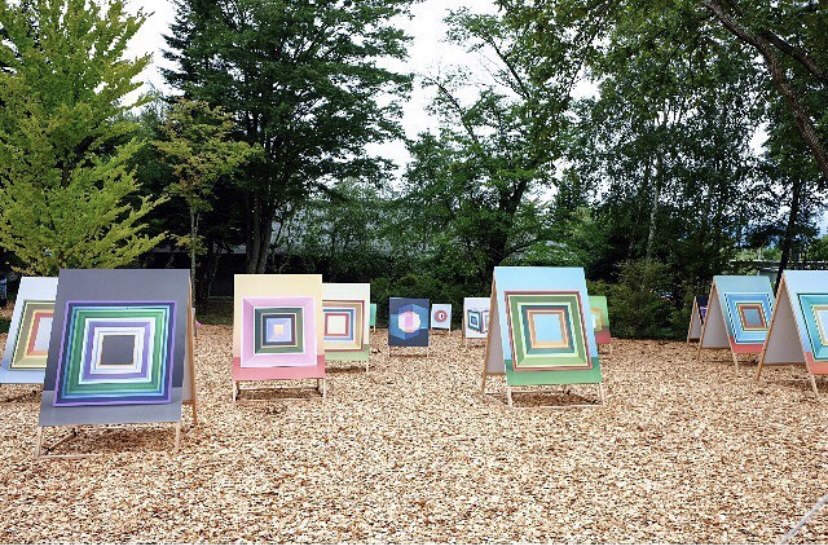
The huge scale of the framed pieces by Jessica Eaton are of great inspiration to me. The nature of the work is without sense of scale allowing for the large printed outcome to take on a nature of its own. These are often hung on gallery walls and so I find myself drawn to the arrangements of ‘A boards’ shown above. The open air nature of the works display makes it accessible and not intimidating to the viewer.
Over the next few galleries I set out a range of works by Noemie Goudal. As with Eatons work, my focus here is on the method of transmission as opposed to their conceptual content.
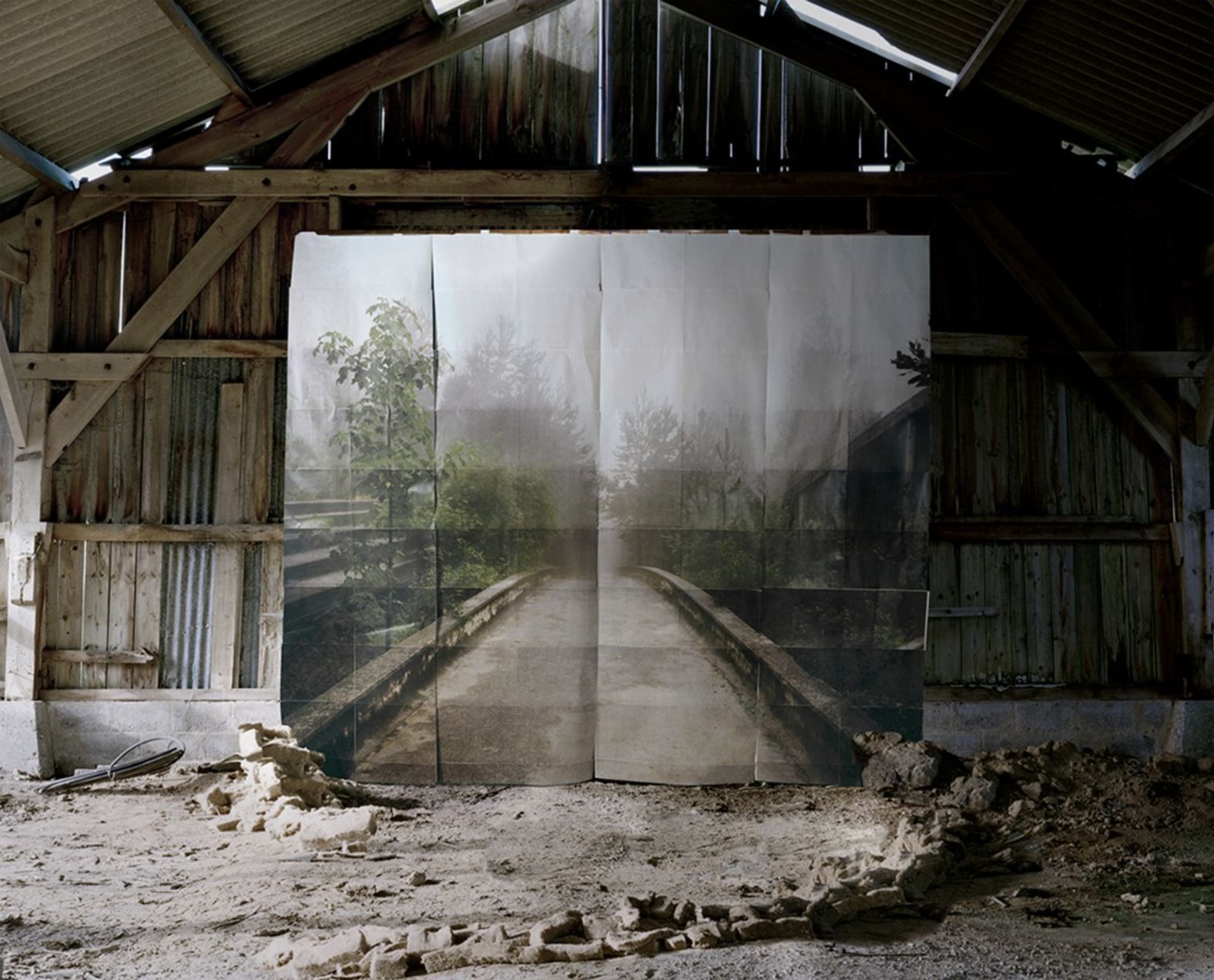
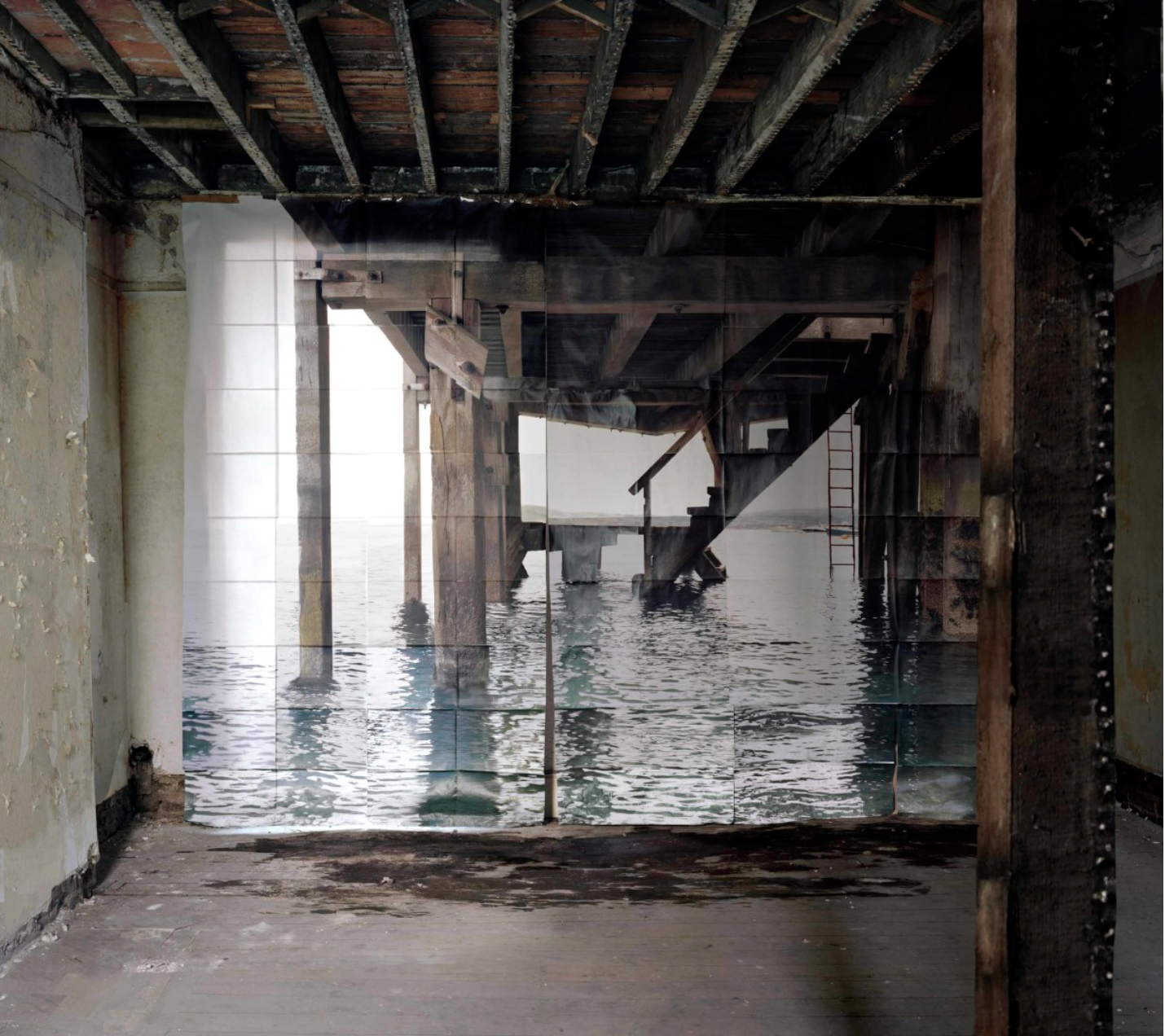
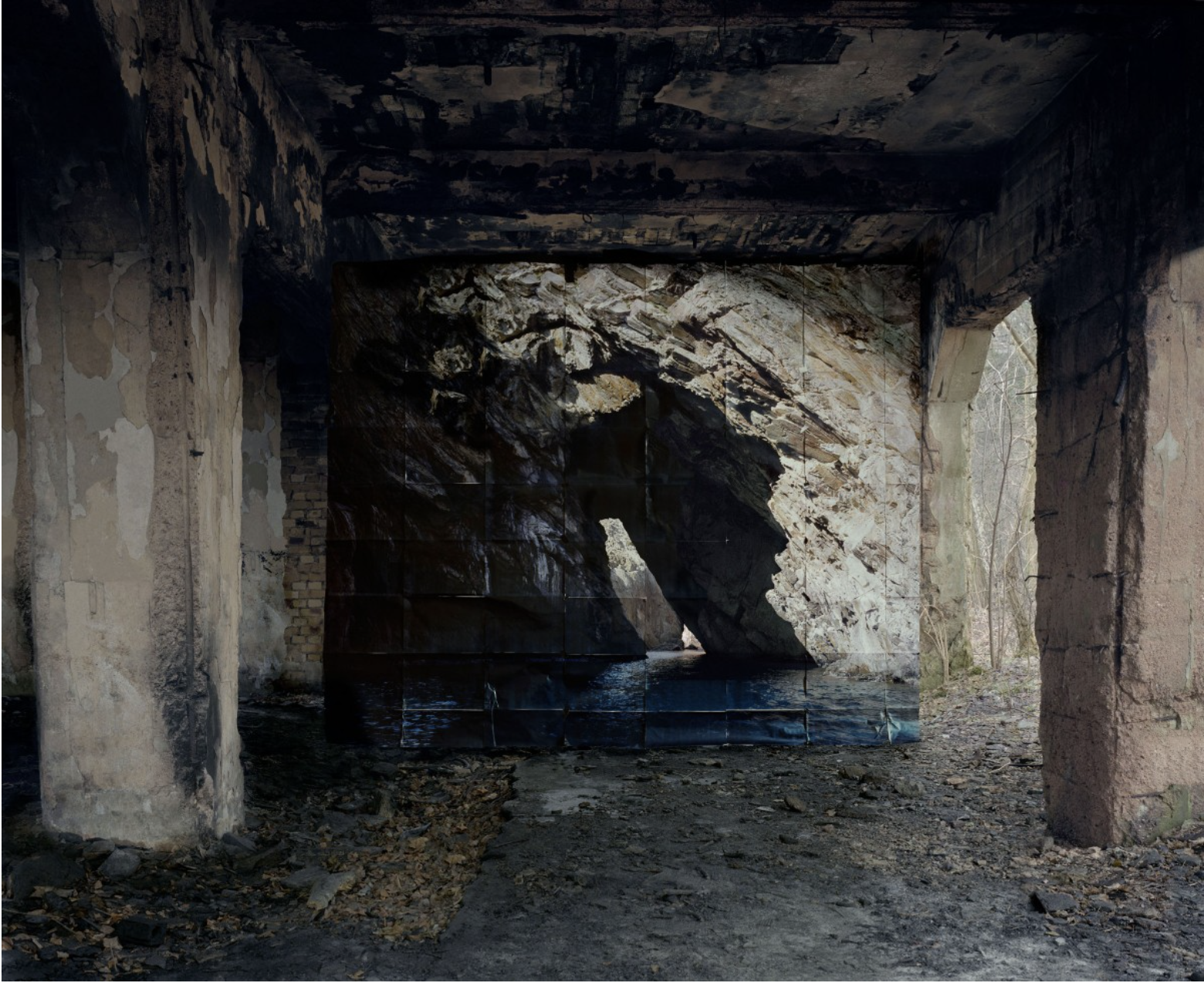
In ‘Haven Her Body Was’ Goudal takes her altered landscapes to create installation pieces in spaces that are often at odds with the scenes they depict. The organic depictions reclaim their inorganic settings.
My interest was in ‘Haven Her Body Was’ leans more towards the method of transmission. Creating large scale pieces through the use of multiple prints reassembled to form their larger ‘parent’ image. This is most likely due to the logistics of getting large scale images into often difficult to reach settings.
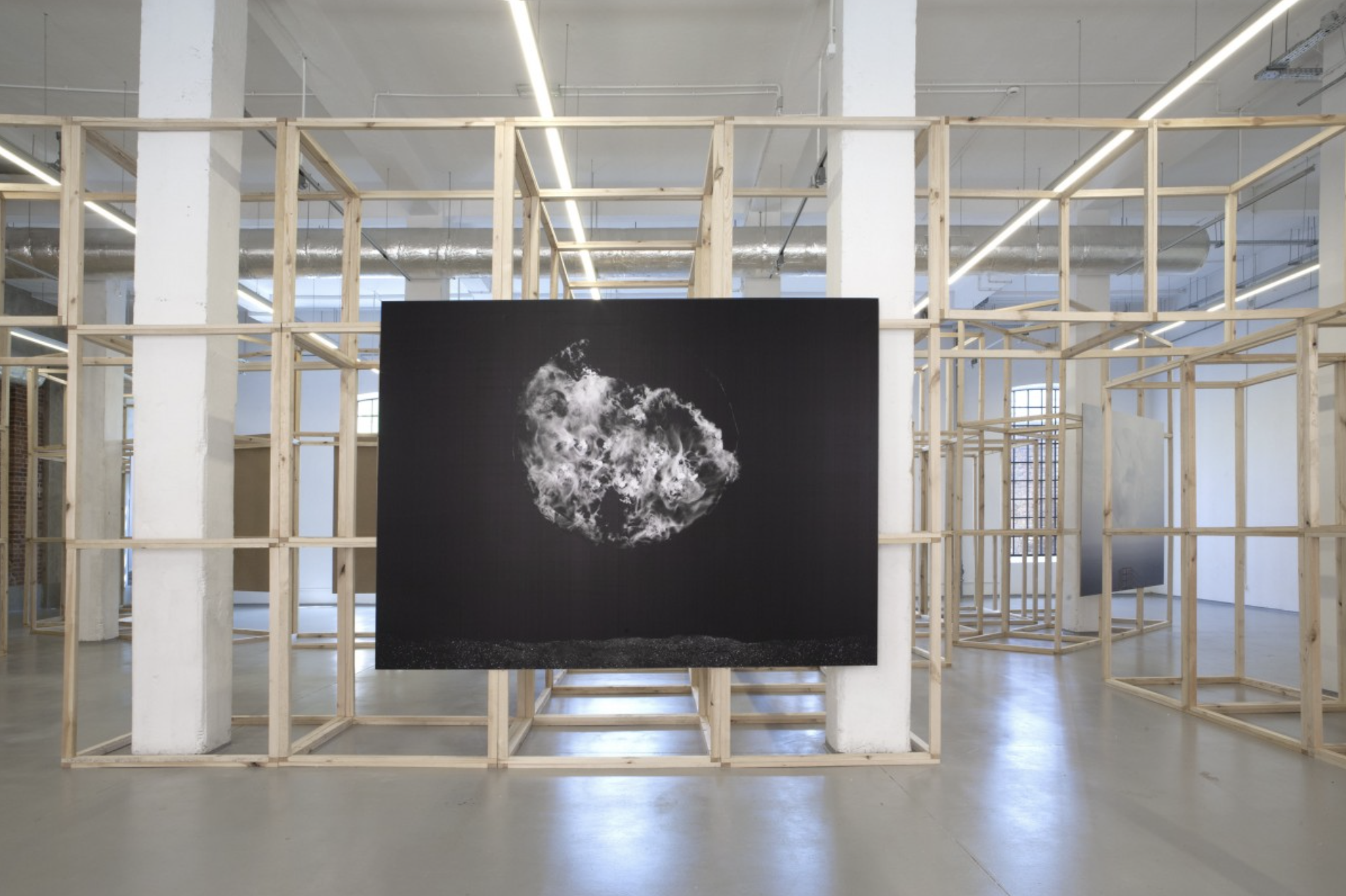
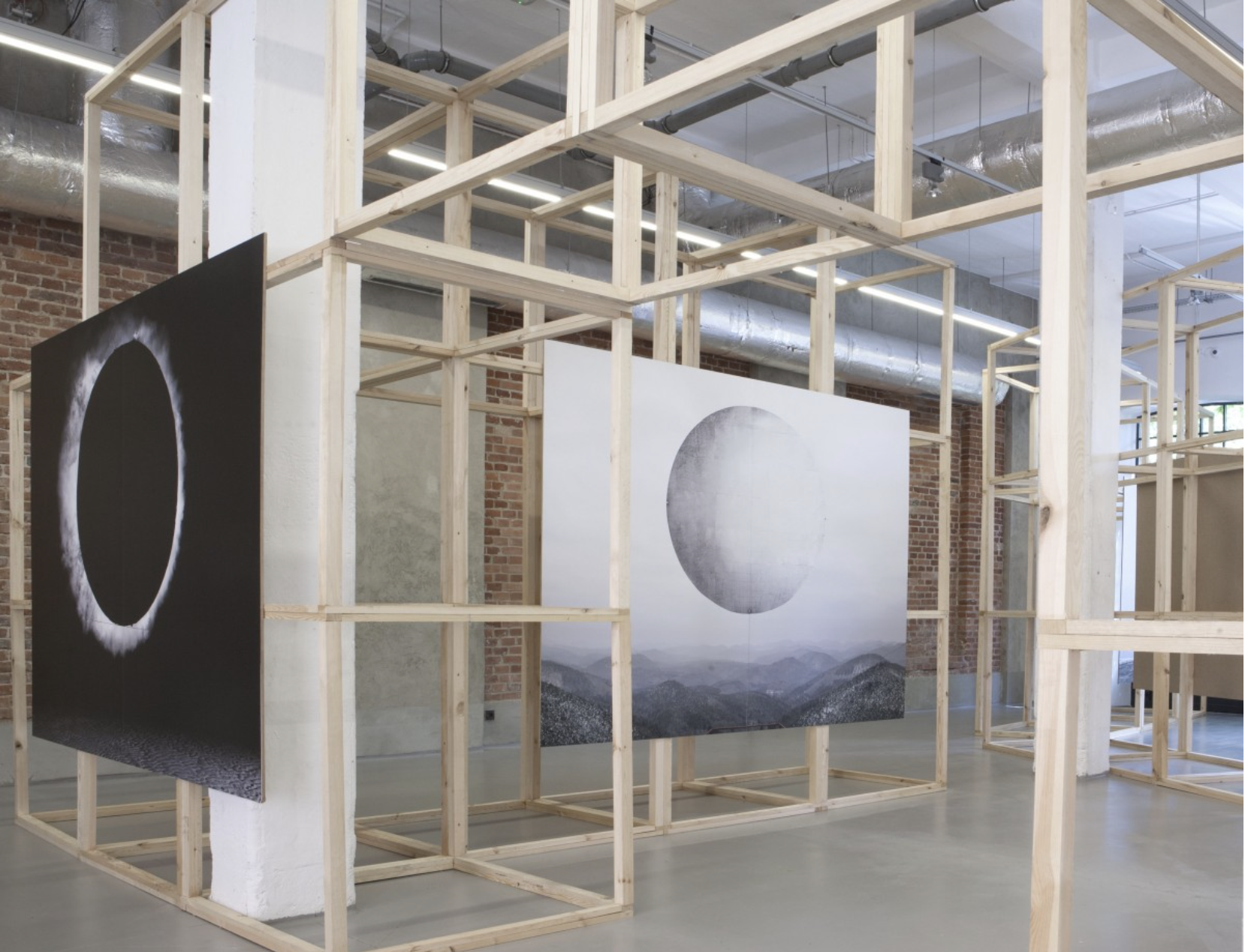
I found myself drawn to Goudals ‘Southern Light Stations’ due to its unconventional timber frame walls as opposed to the use of white sheet materials which often close in a space making it intimidating to some. The result is an open plan feel while also structuring how one moves through the space. The added advantage of a lack of conventional walls allows the viewer to see through and past the outcomes. Although this obscures some sequencing, it certainly brings a different aesthetic.
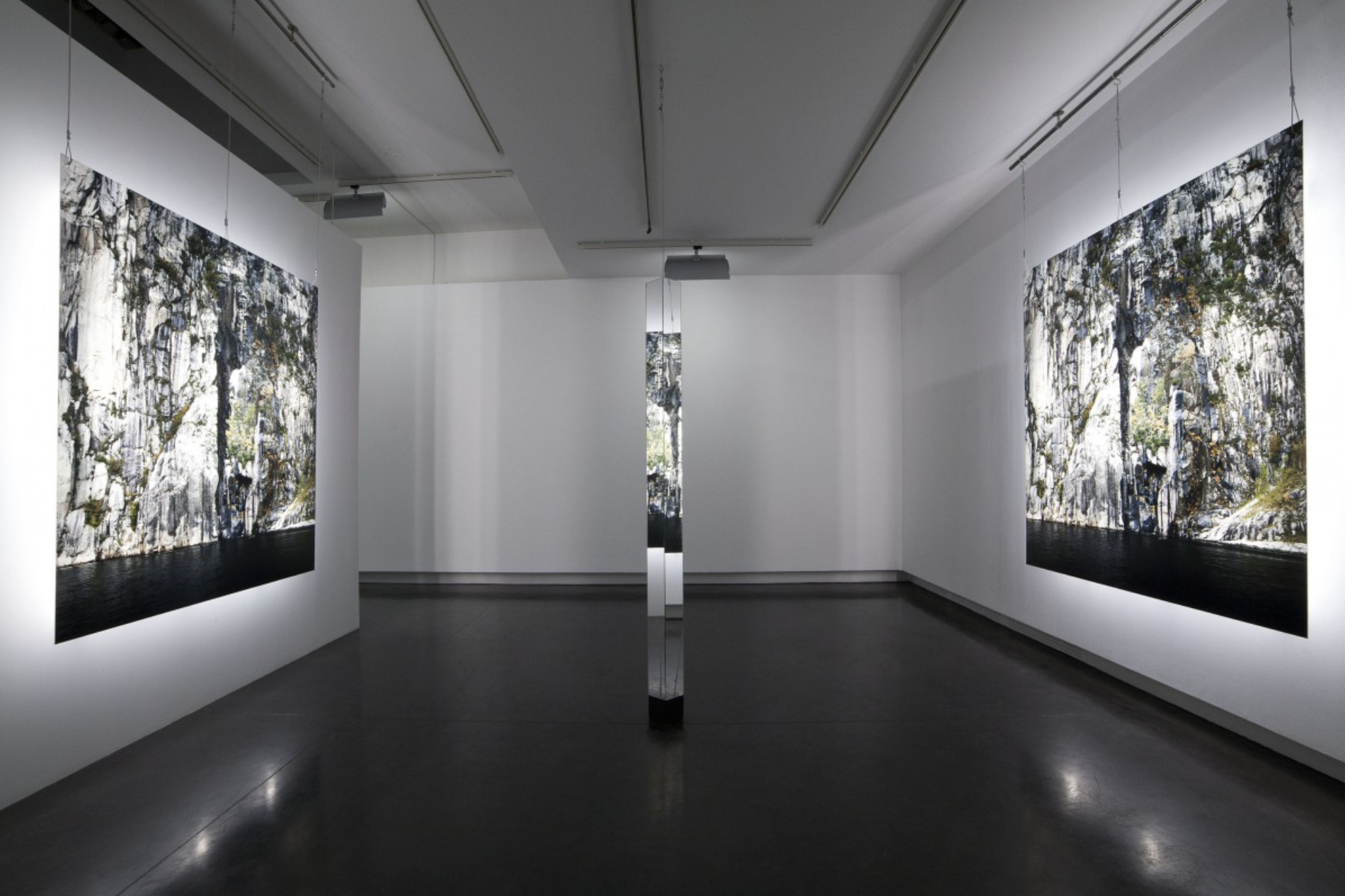
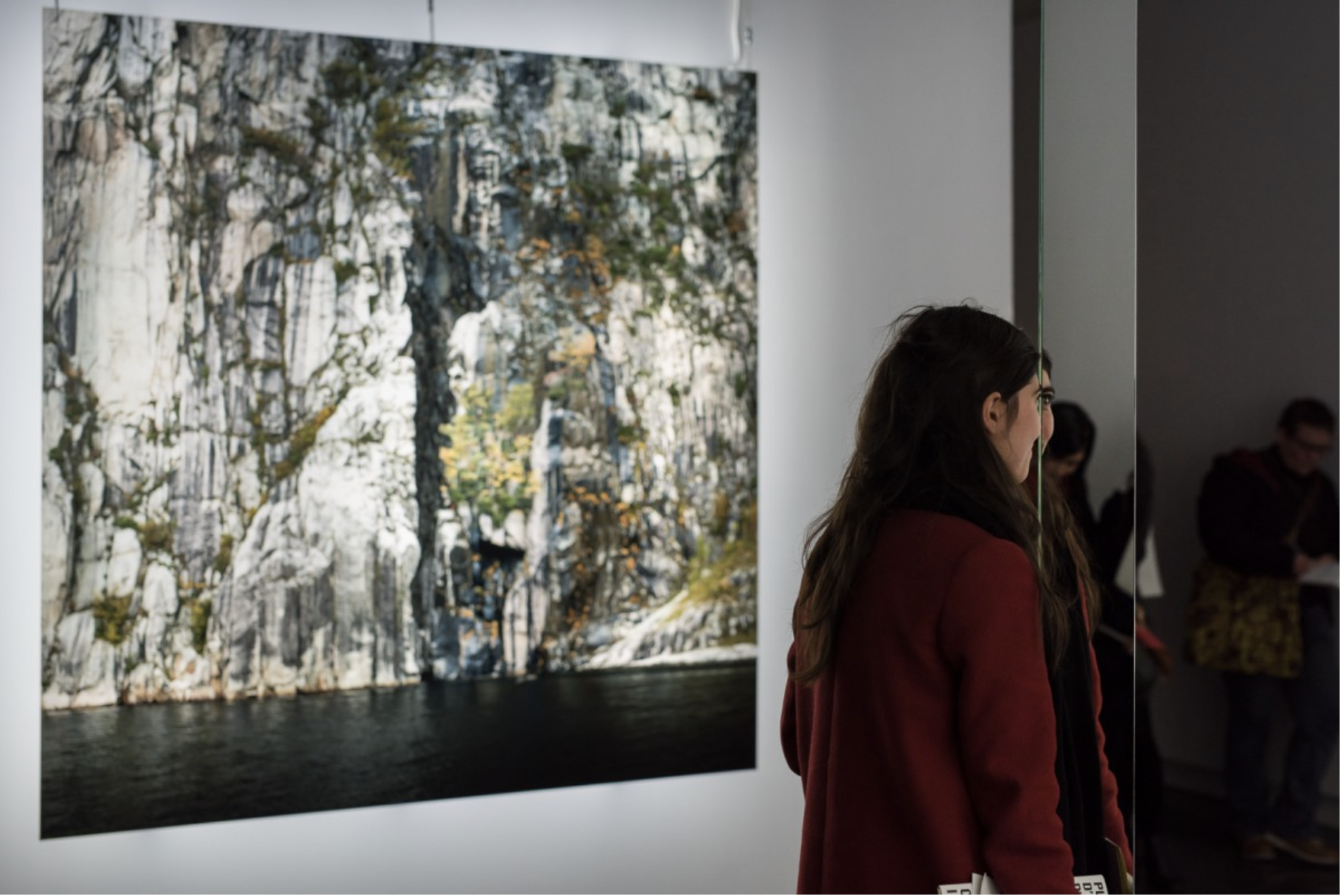
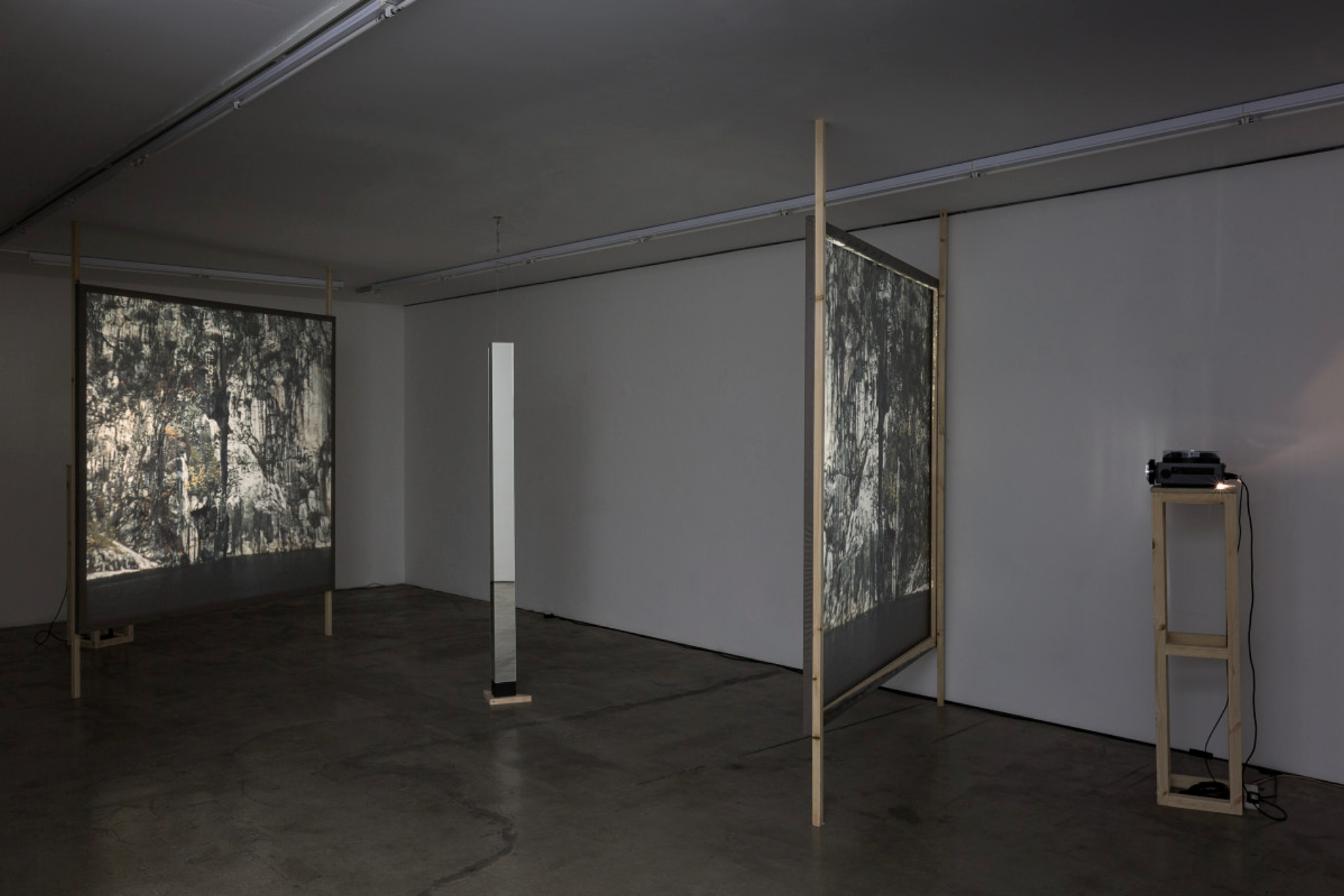
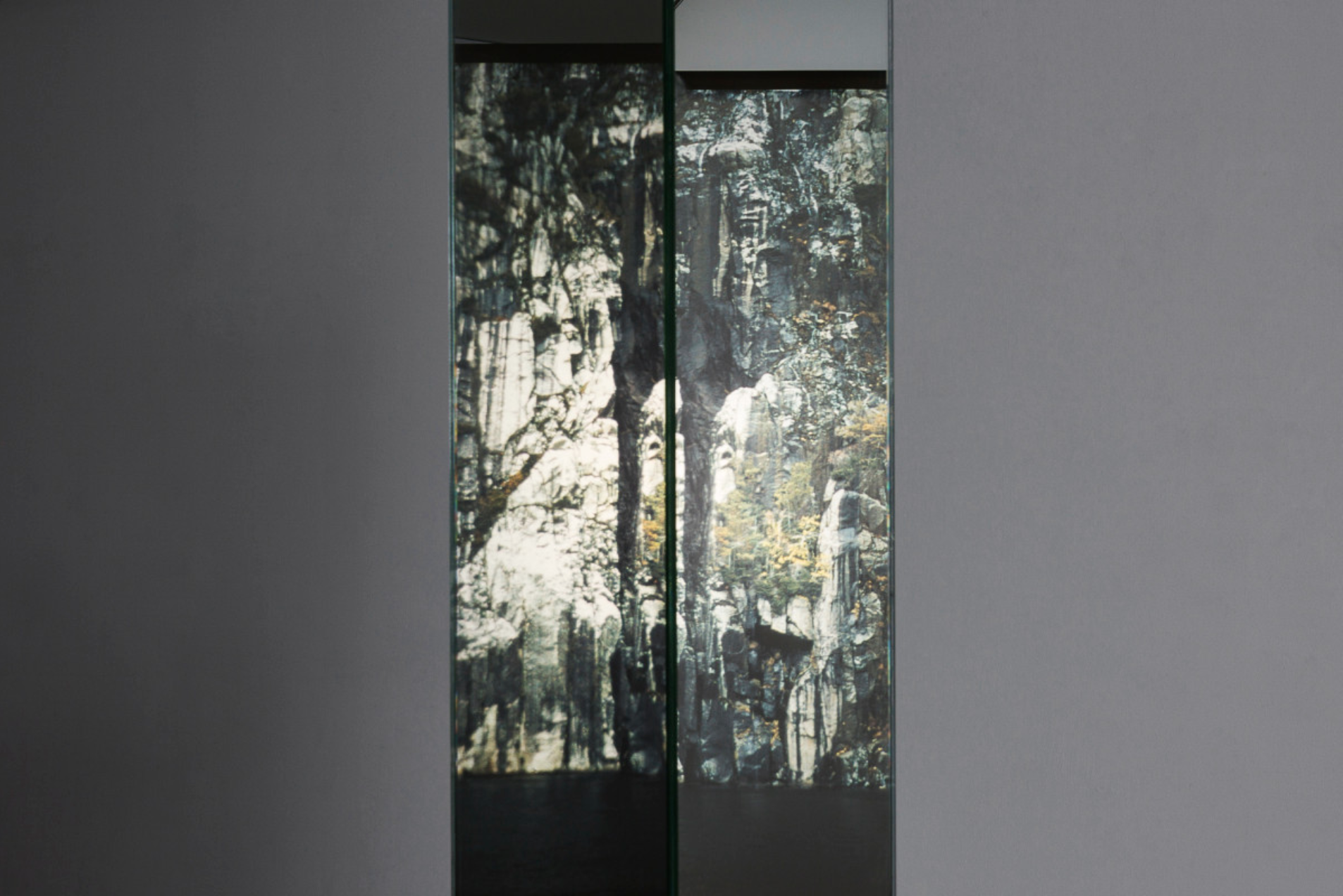
Through the use of dynamic projections, Goudal takes her altered landscapes further but changing the way they are depicted and perceived. The use of projection always comes with logistical difficulties through the fall of the light and how the viewer casts their own shadow on the work. In many regards this furthers the altered appearance of the work in ‘Study on Perspective II’. Although projections could be of interest to me I feel if one try’s to place too many methods of dissemination into their work then the appearance of that work becomes more and more convoluted.
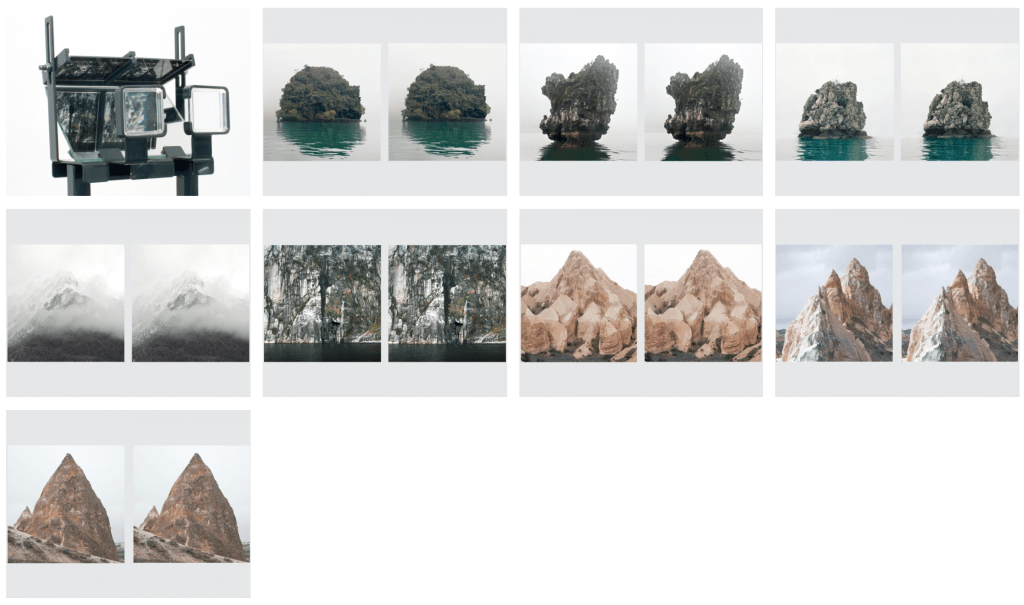
The final presentation of Goudals I wish to reflect upon is her ‘stereoscopes’. My encounters with stereoscopes, outside of childhood, have only really been in recent years with their use in the new Photography wing of the V&A in London. The optical illusion tricks the eyes into believing they are viewing a 3D image rather than the very much 2D card in the viewer. In terms of a landscape view, this adds a more immersive dynamic where the viewers participation is key to the works success. As with the projections I feel the addition of stereoscopes would dilute and complicate my intended message.
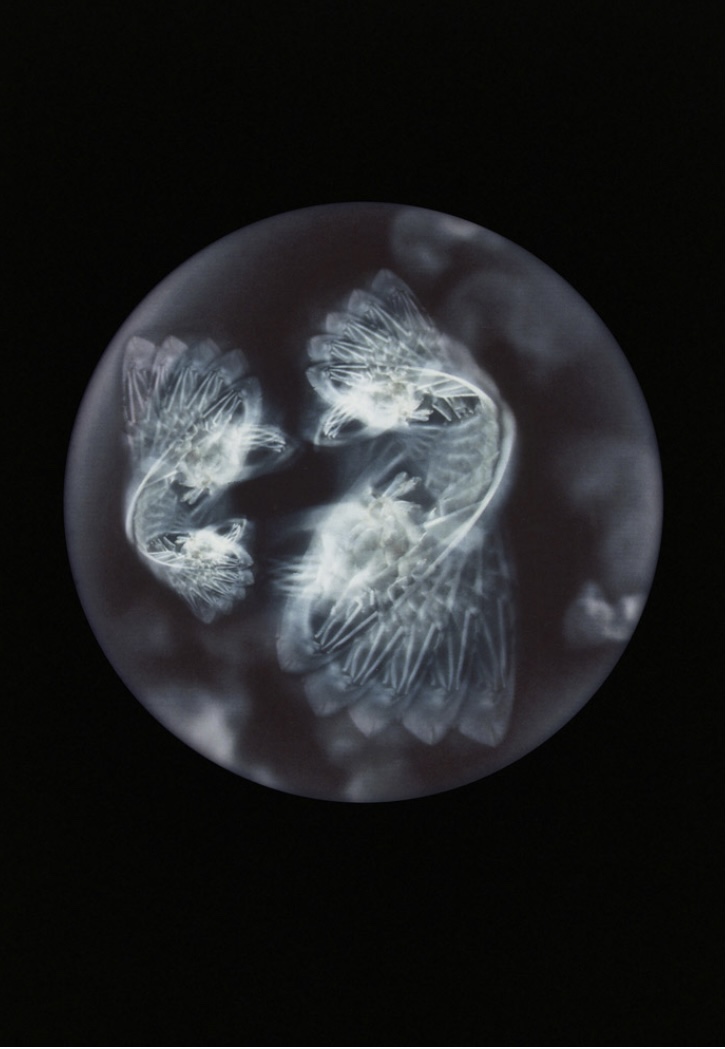
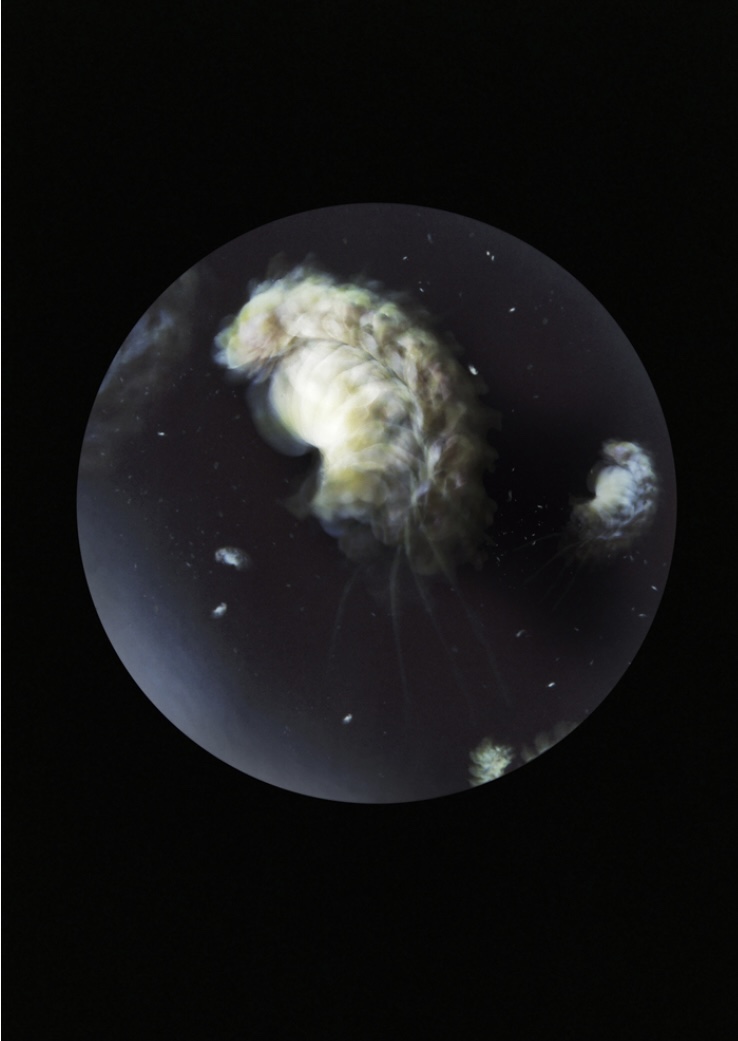
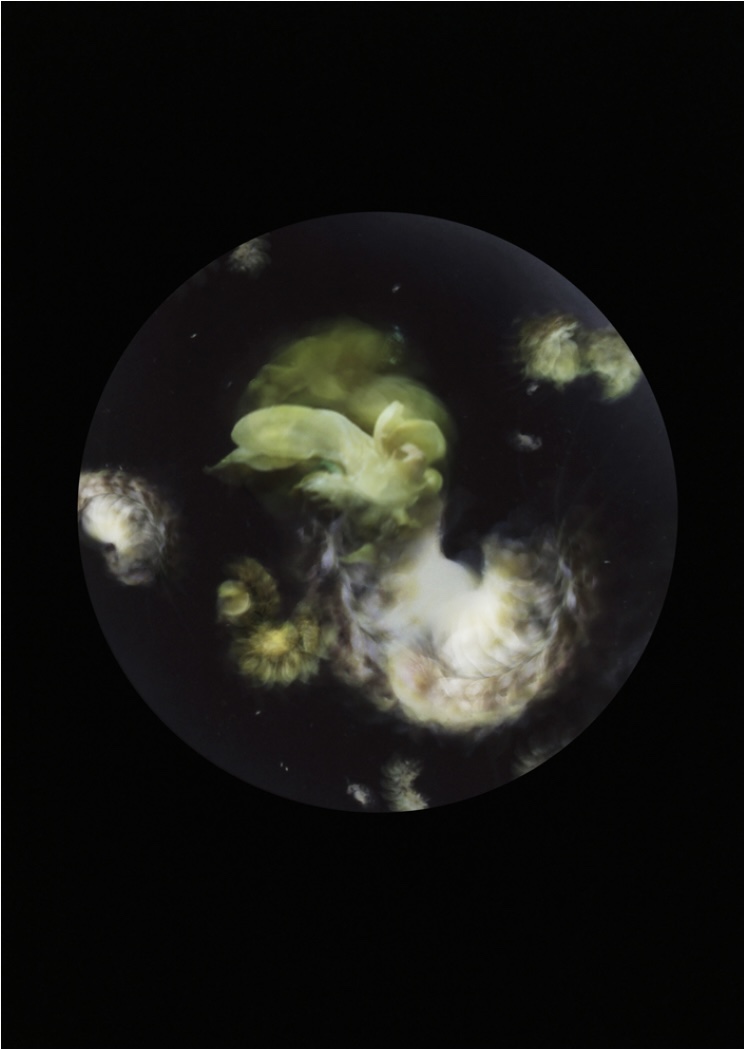
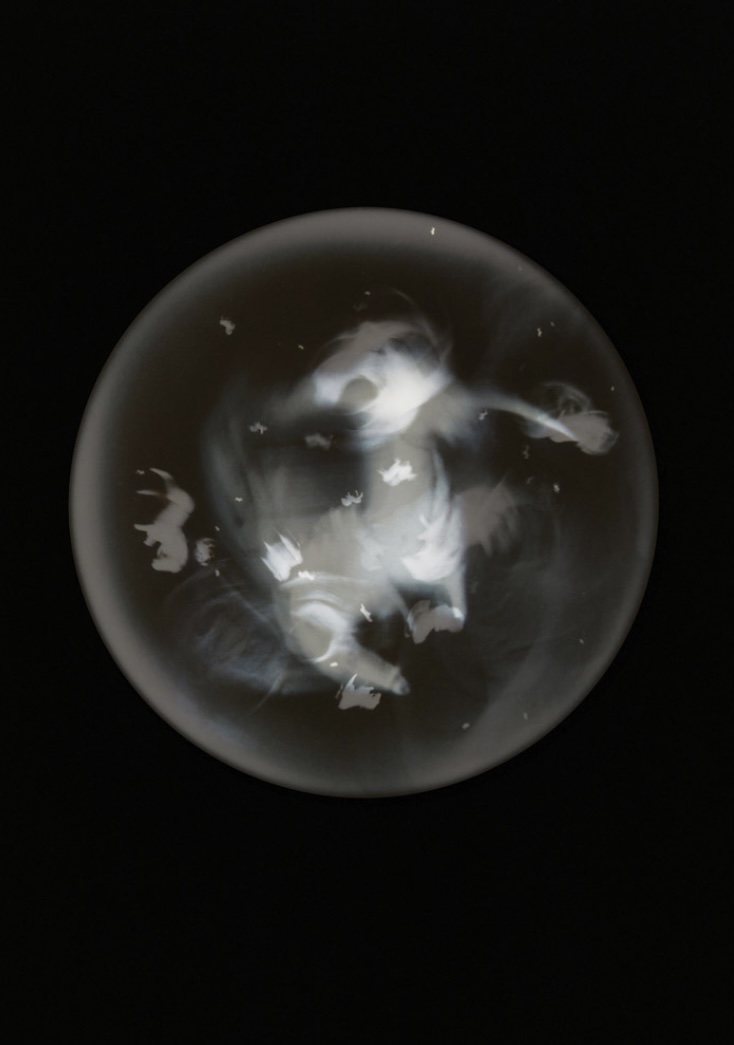
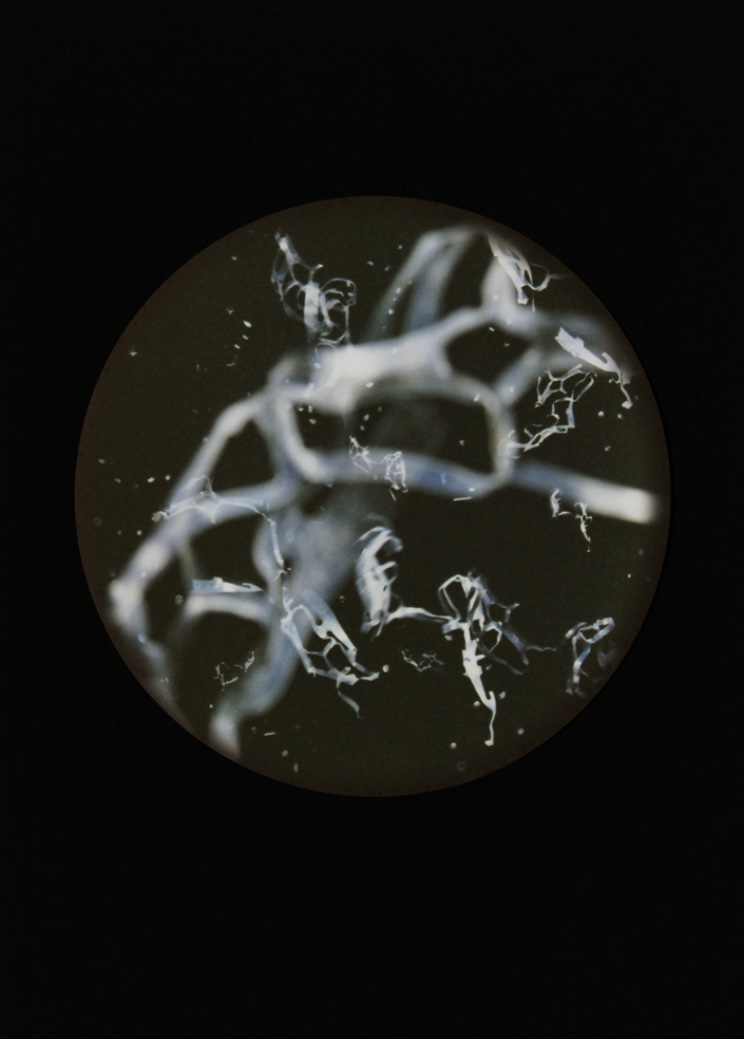
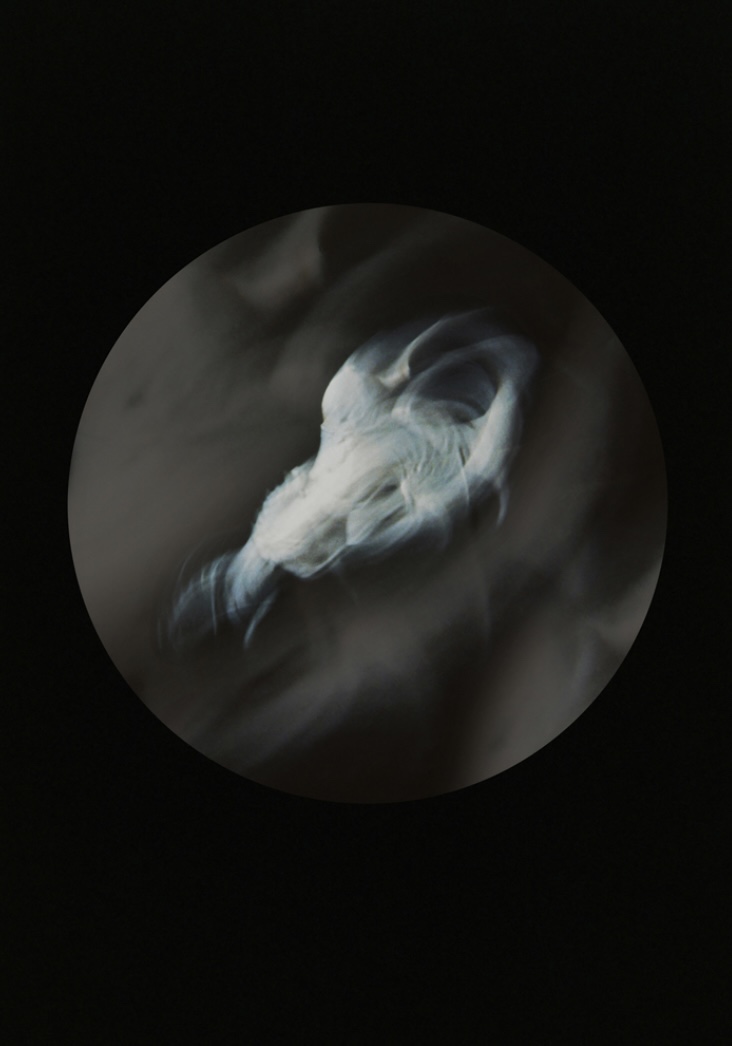
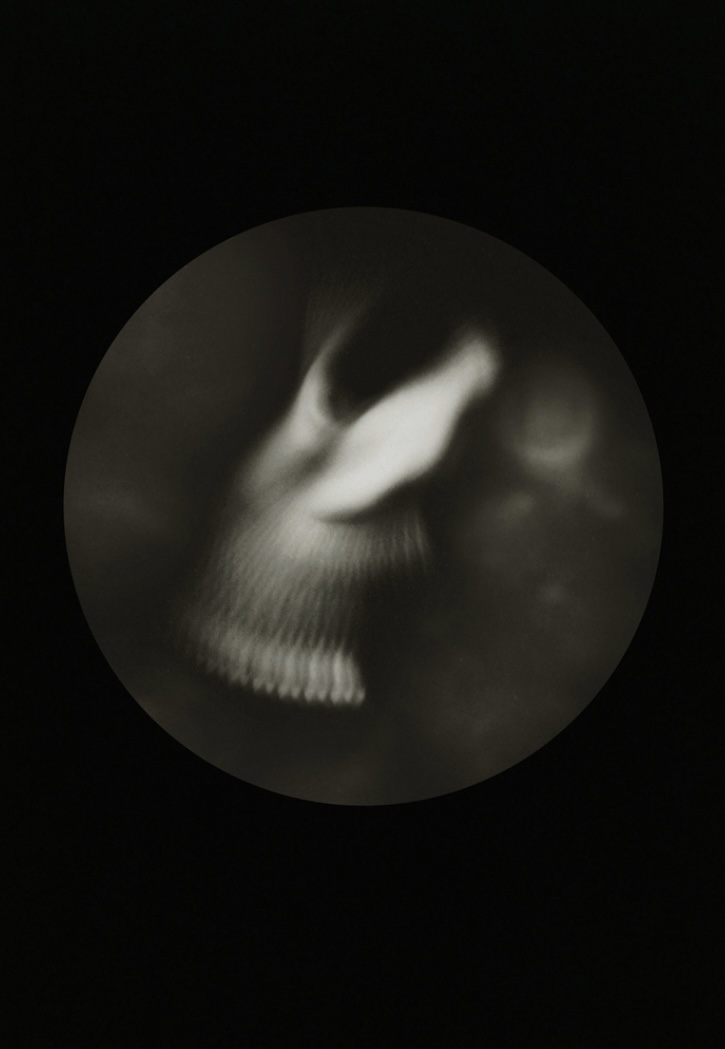
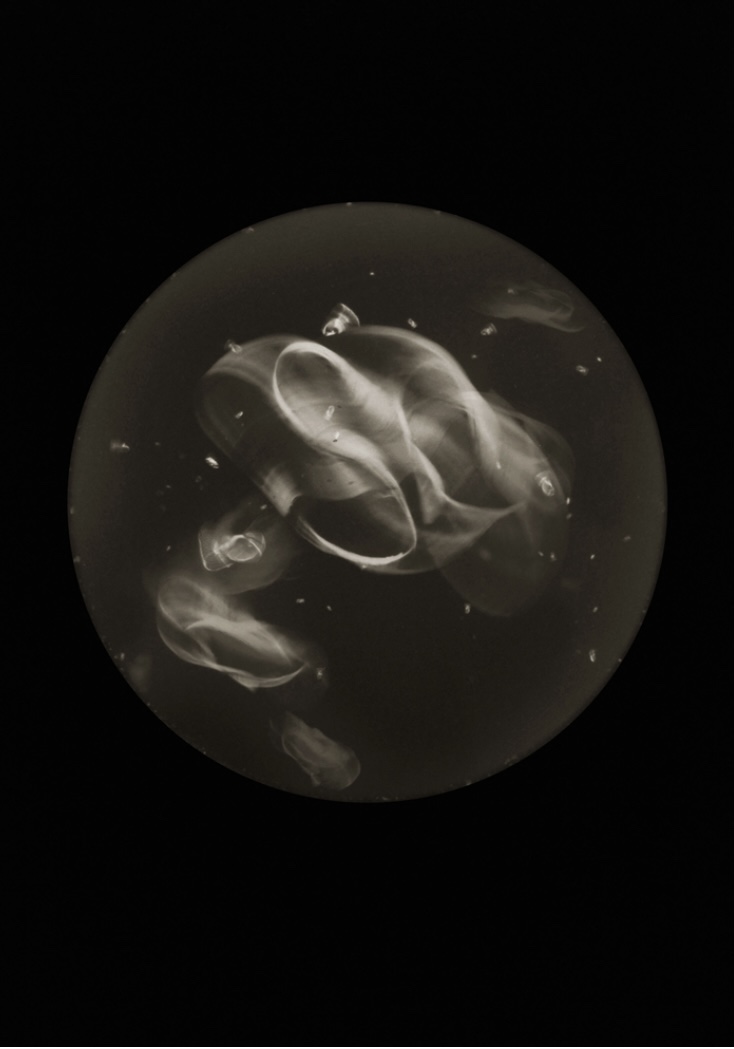
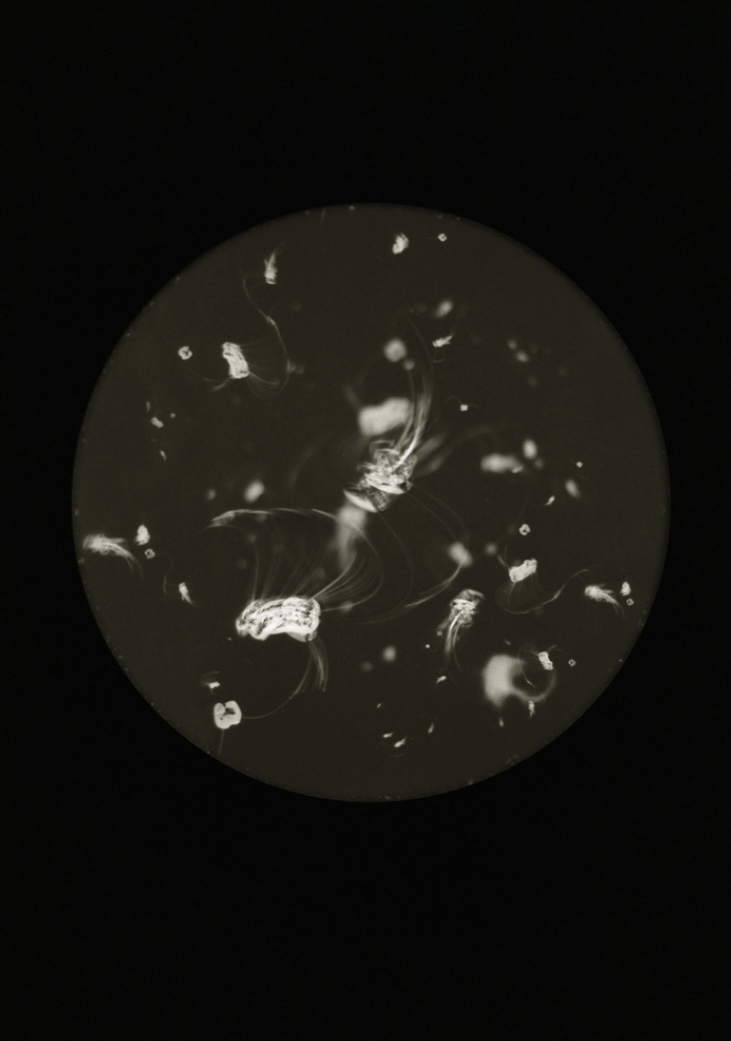
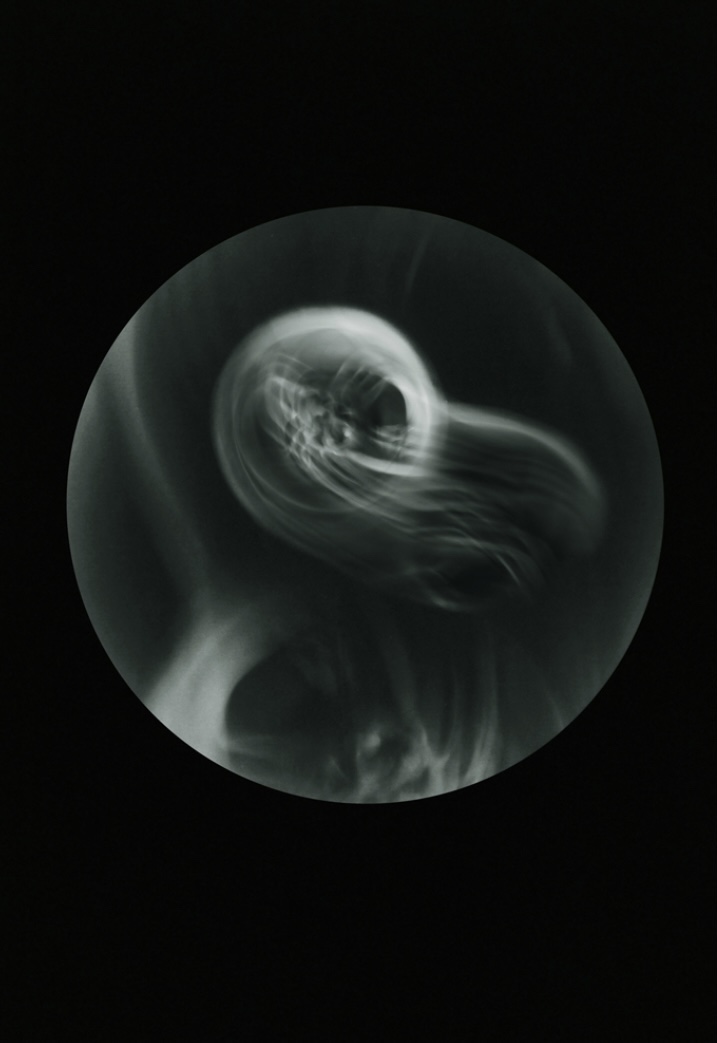
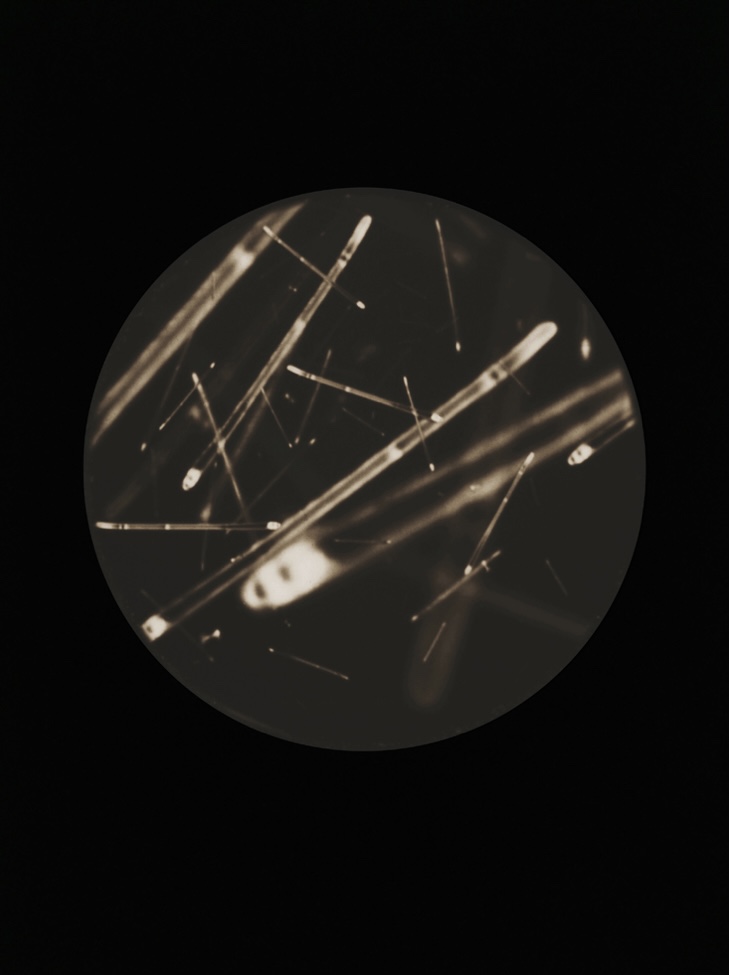
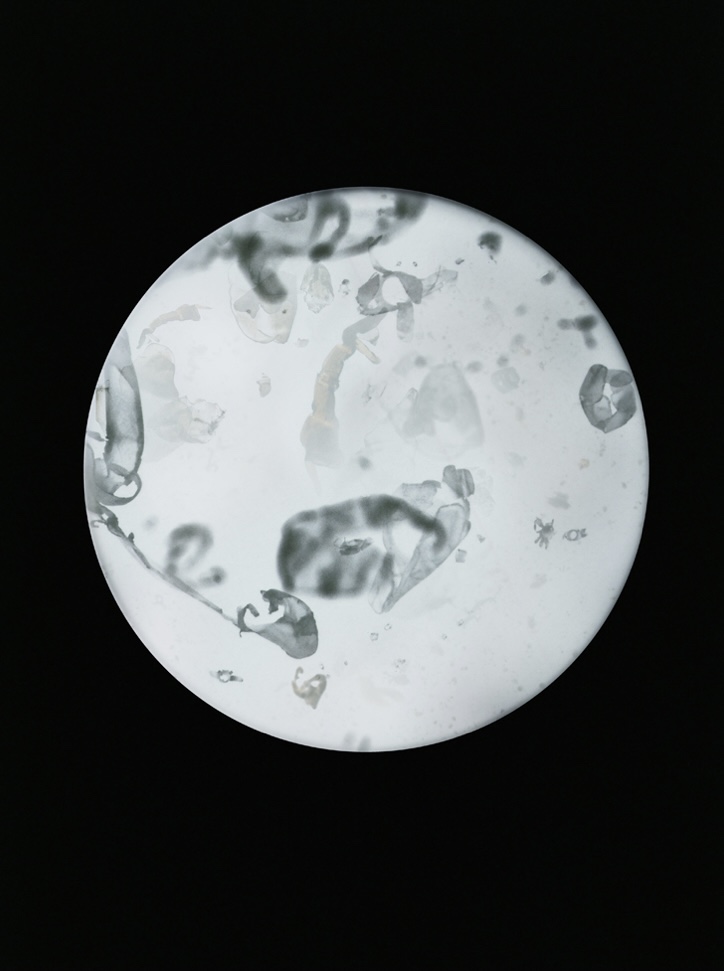
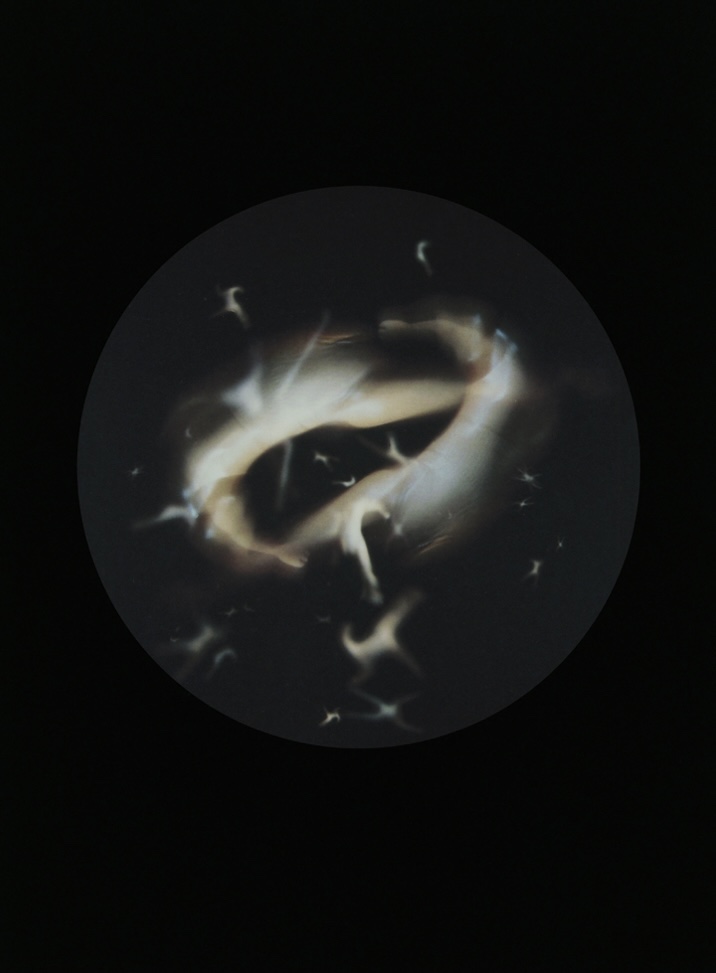
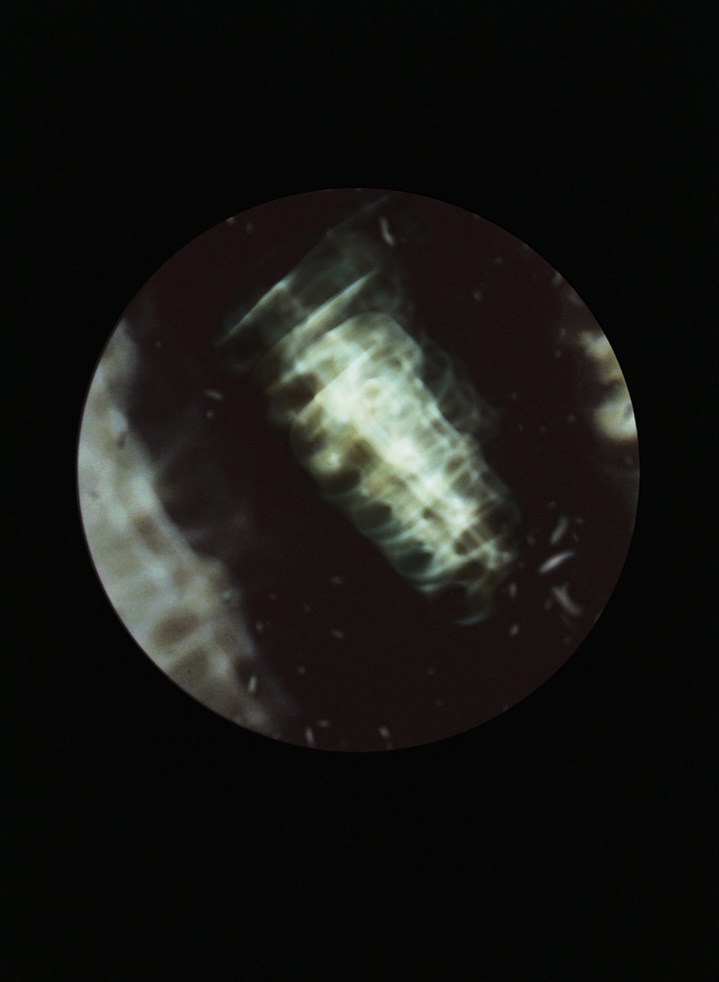
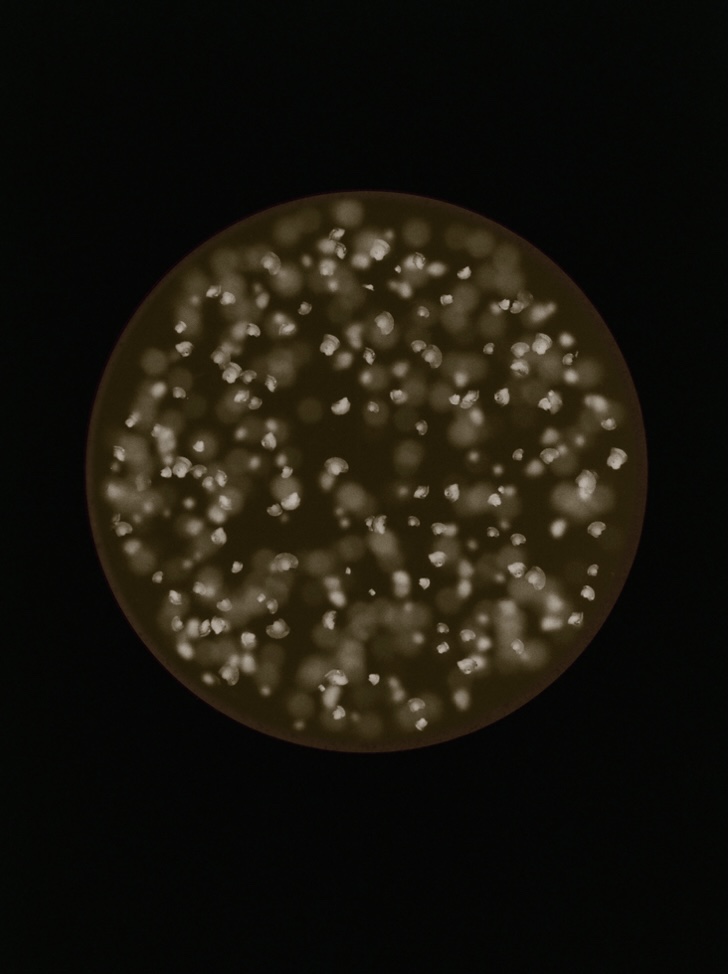
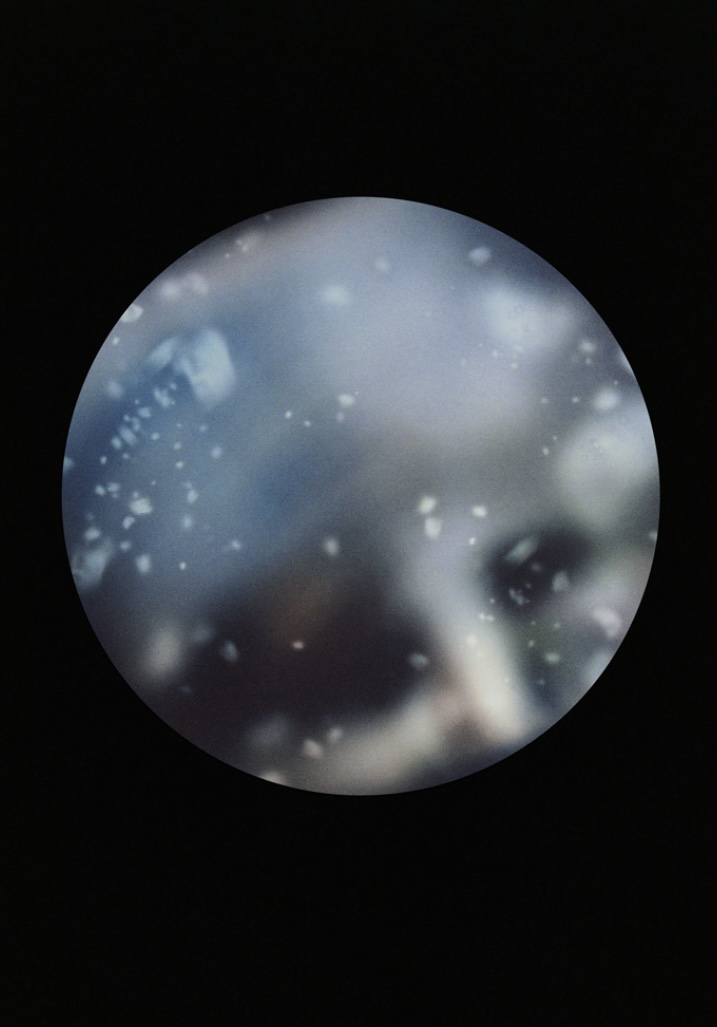
For my analysis of Mandy Barkers ‘Beyond Drifting’ I have decided to split apart the two areas of her outcome. The prints above represent enlargements of microscopic slides and feel to have a vignette akin to those found in early photographic images.
The outcomes are beautiful and surreal. The viewer becomes forced to engage with an unfamiliar scene, this unfamiliar aspect entices us to look longer and to inspect what it is we are seeing. If there is a drawback to be found here it can be seen in the below gallery which depicts the book with the accompanying prints. The positioning of the prints above the book reduces the audiences ability to come closer and to engage with what they are seeing.
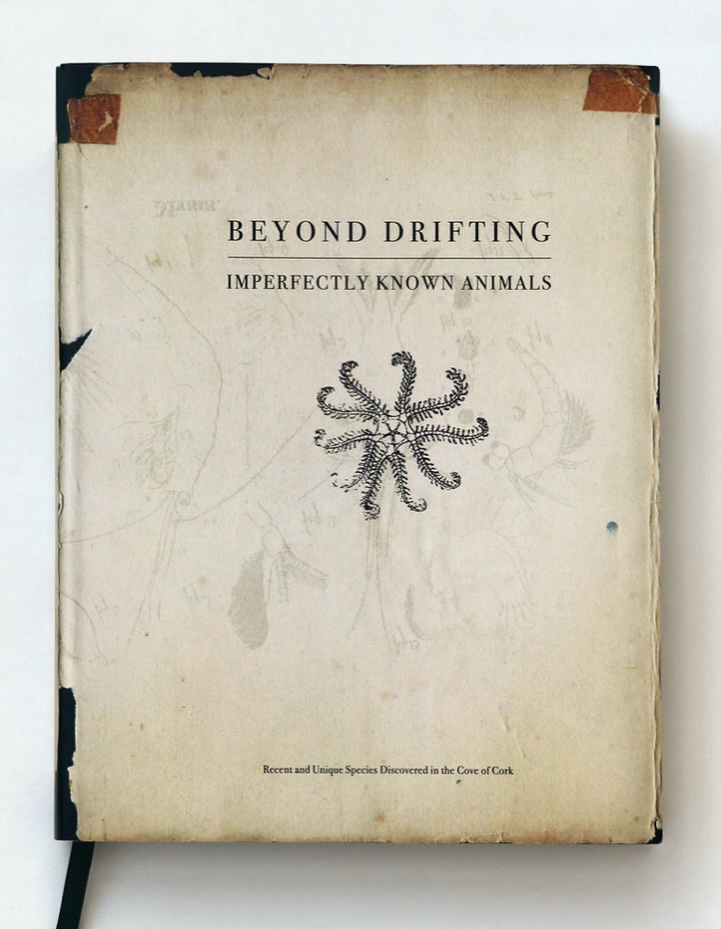
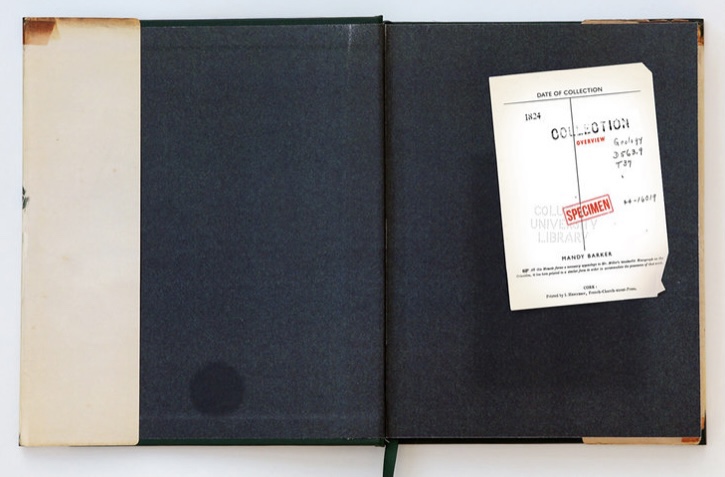
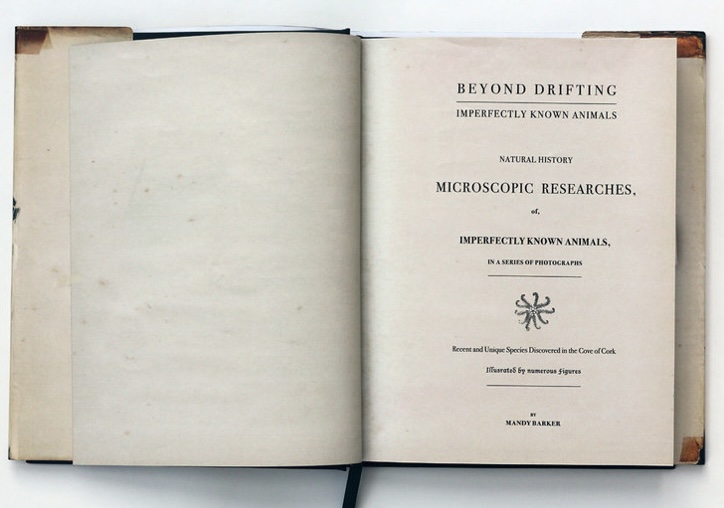
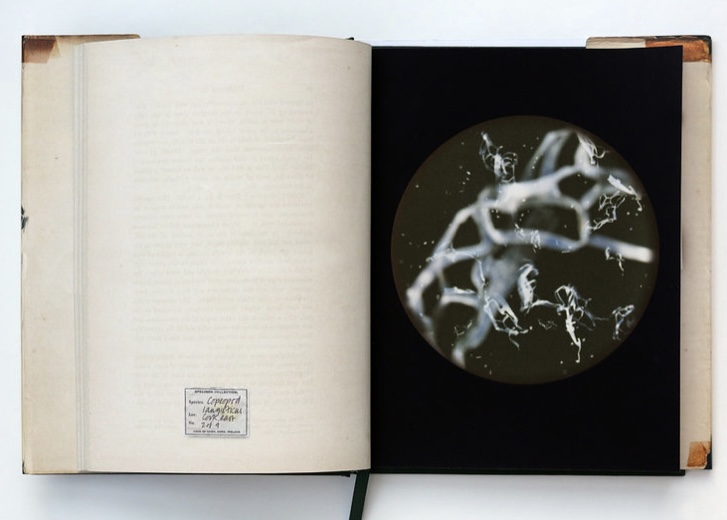
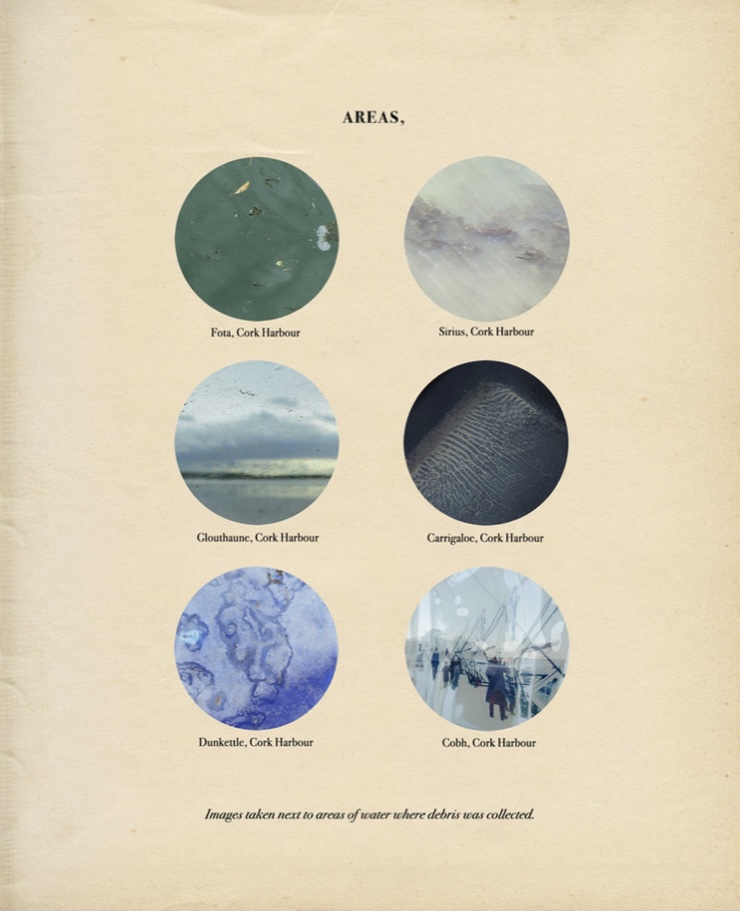
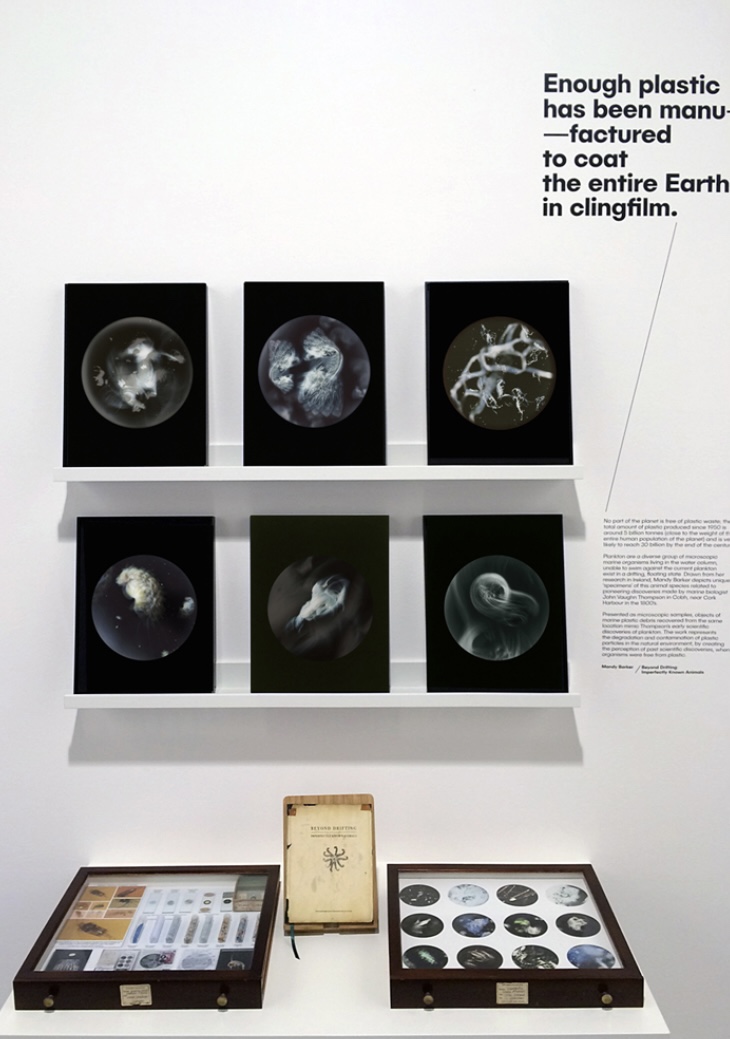
The accompanying book with Barkers ‘Beyond Drifting’ is built to mimic a scientists field book circa 1800. The faded pages and notations around the imagery compliment the very modern digitised microscopic samples.
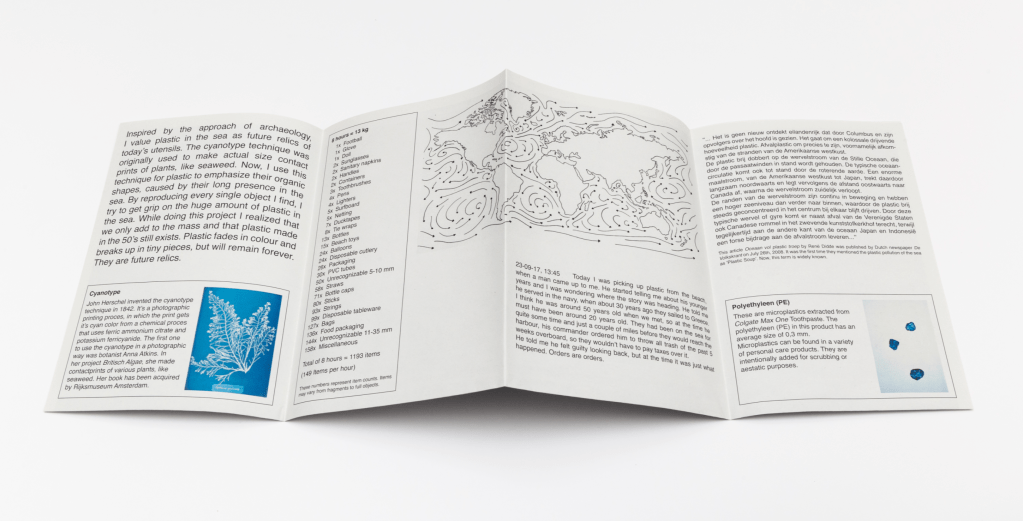
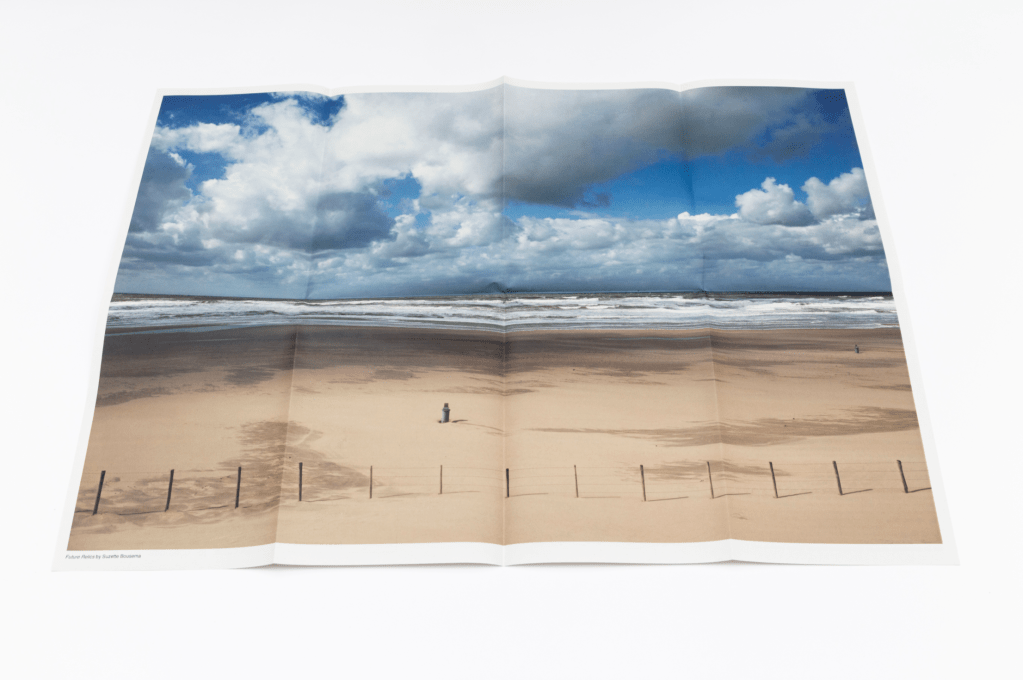
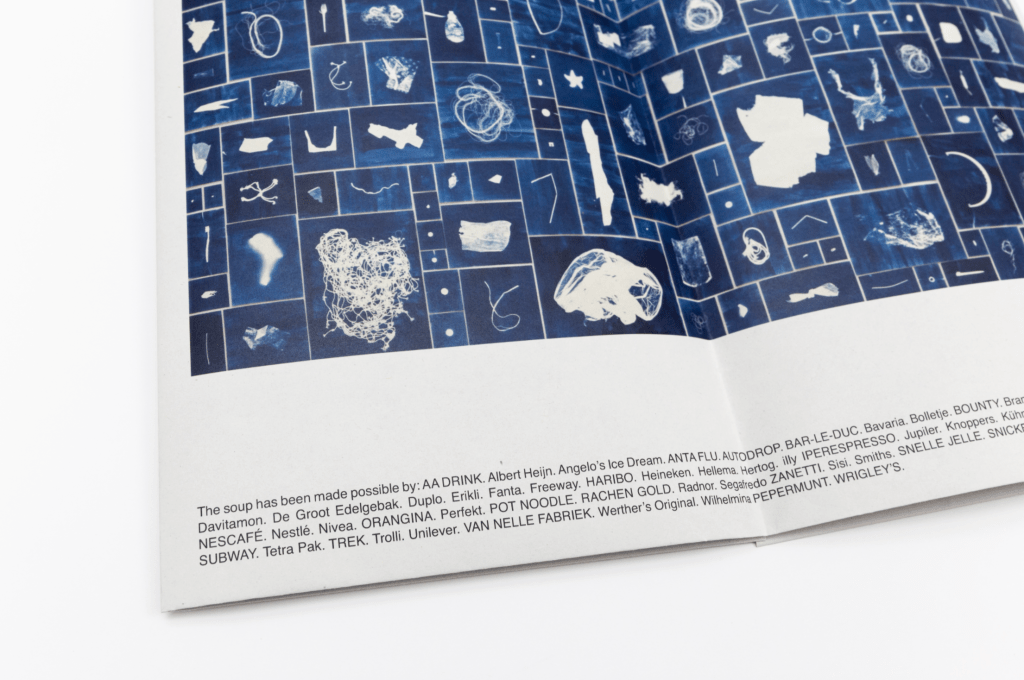
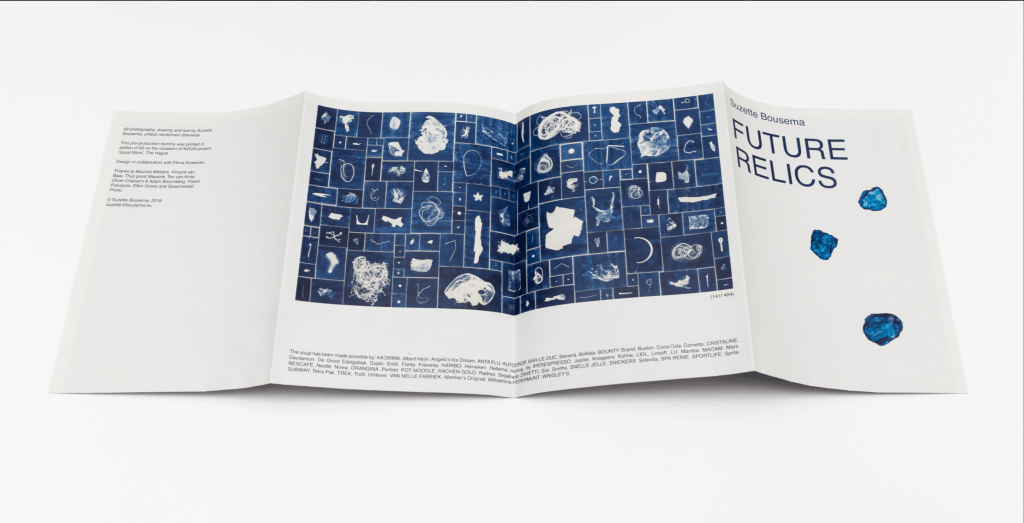
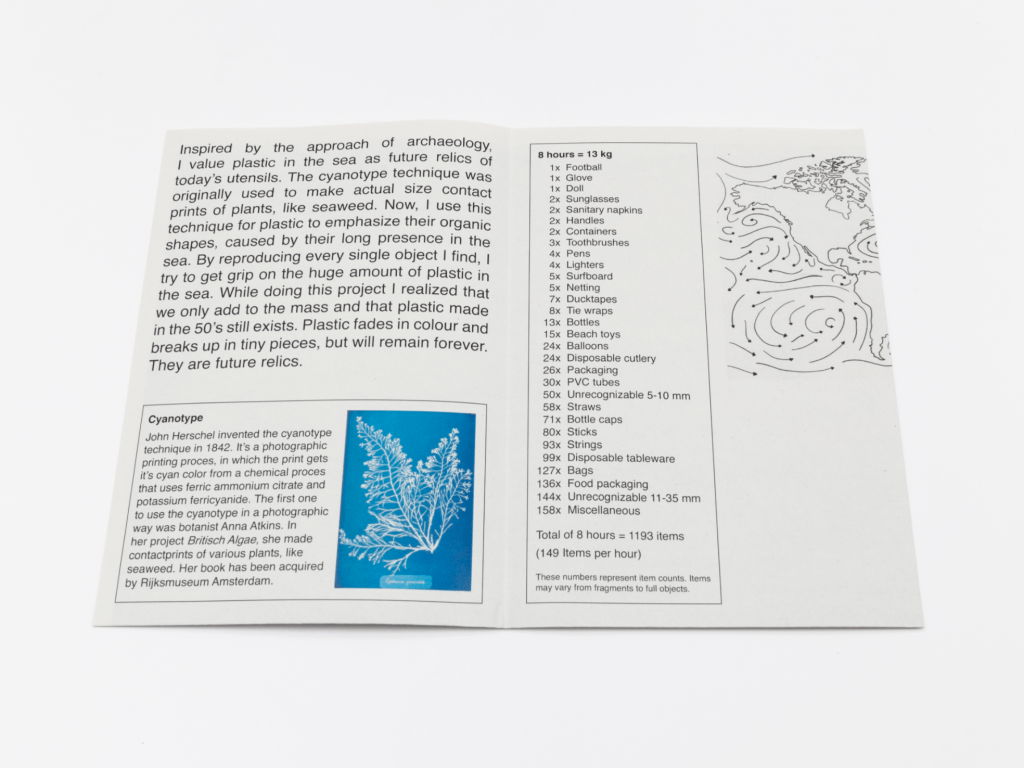
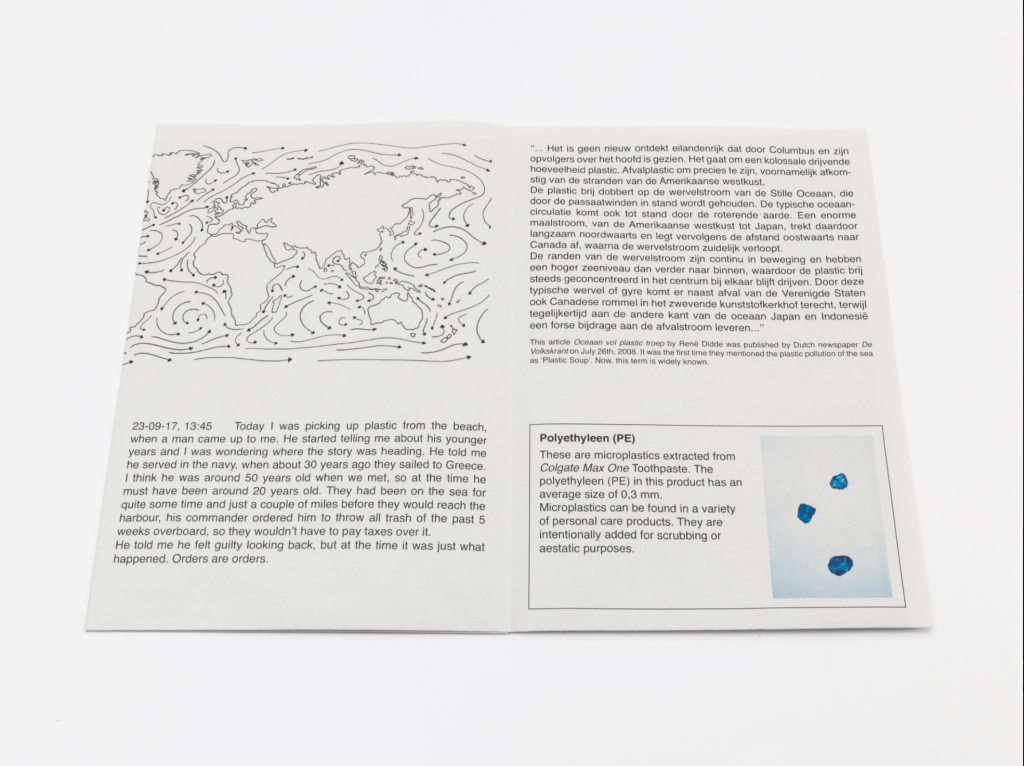
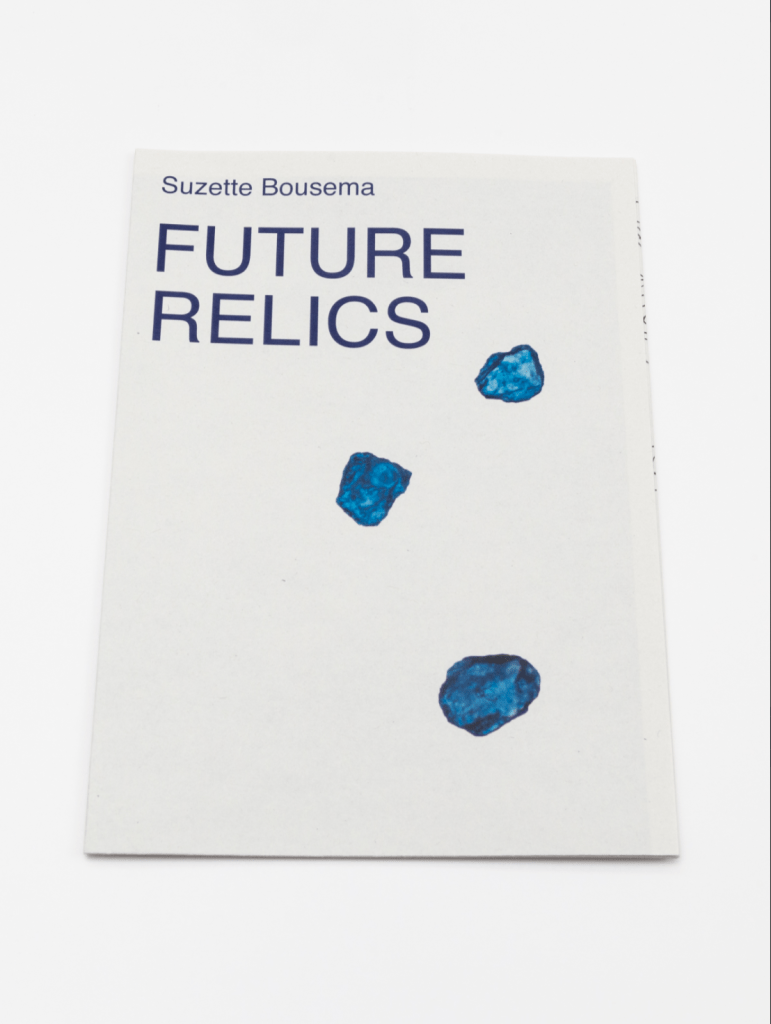
Bousema’s ‘Future Relics’ is a series of cyanotypes created using rubbish found at a specific location. This location is then mapped out and showcased through a folded ‘book’ which opens out to show a stunning vista of the location in which the artefacts were found.
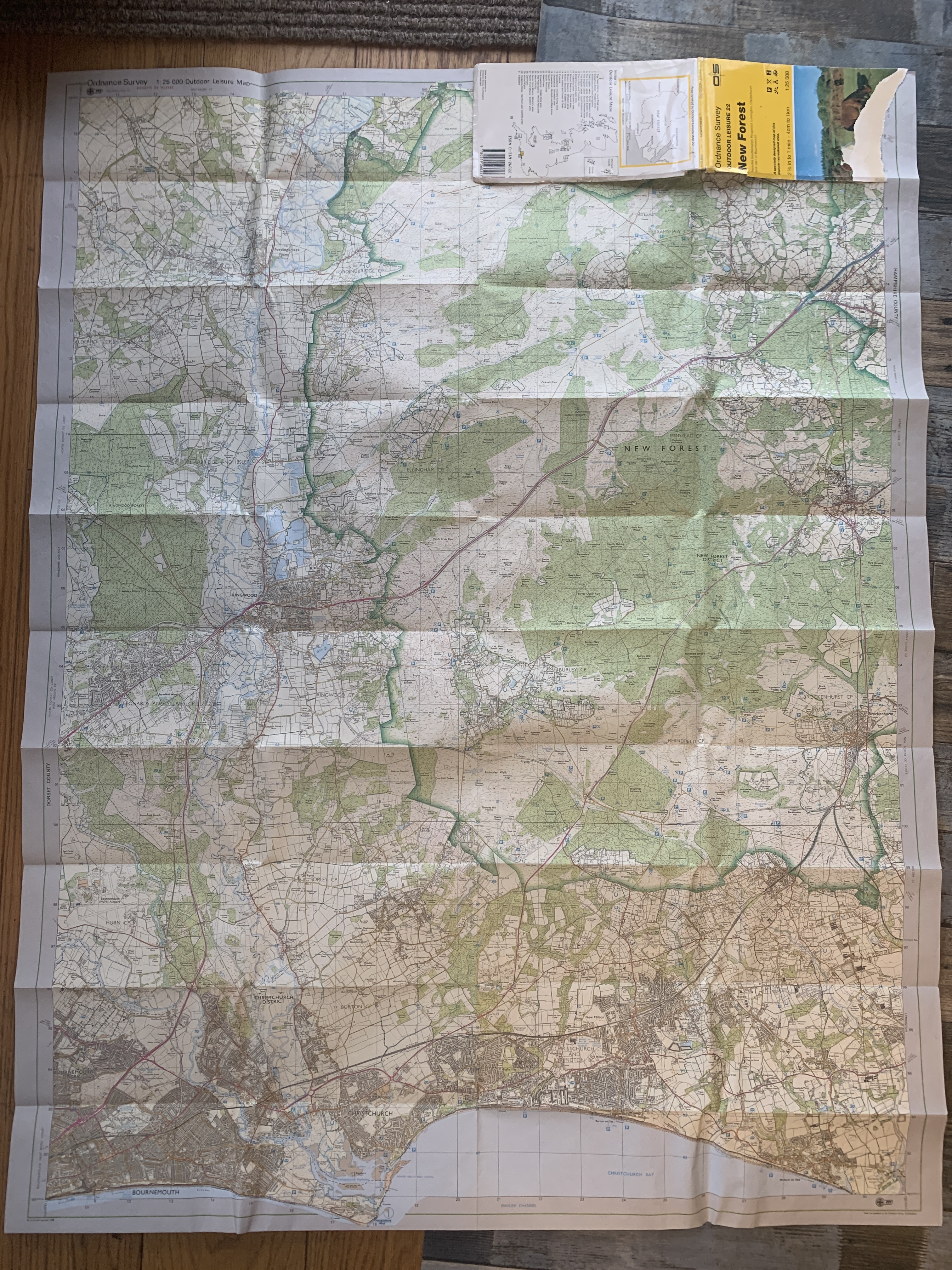
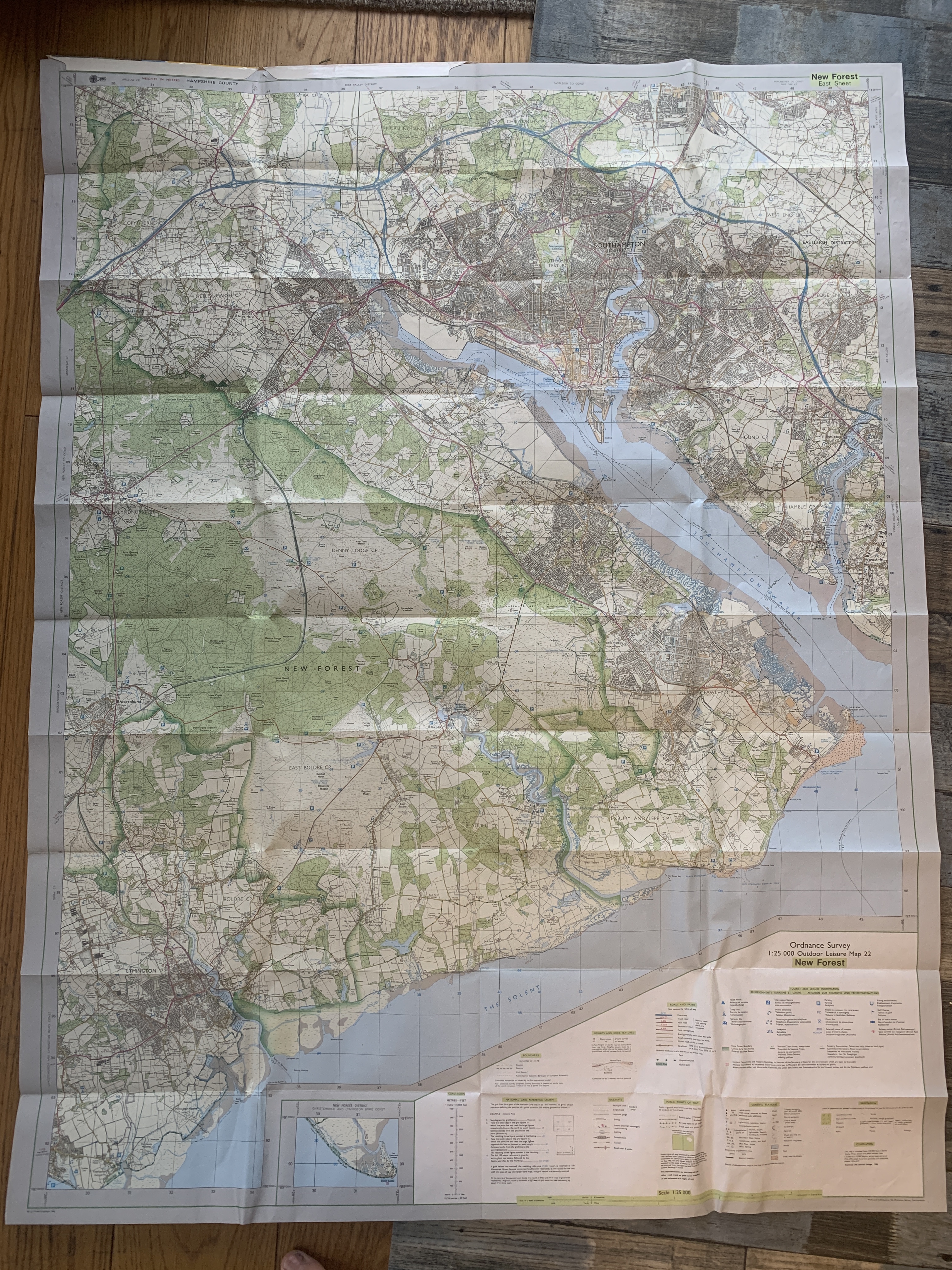
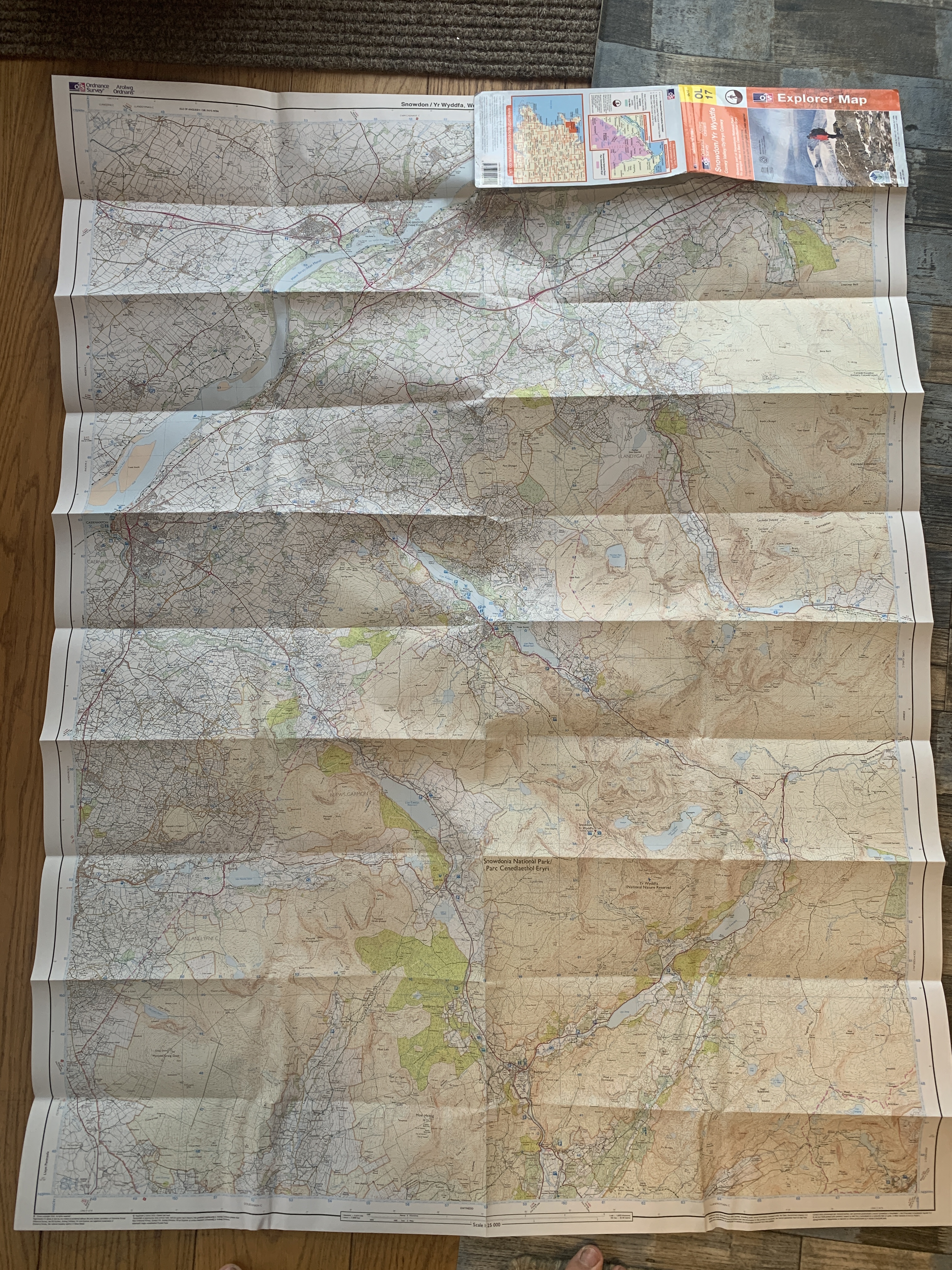
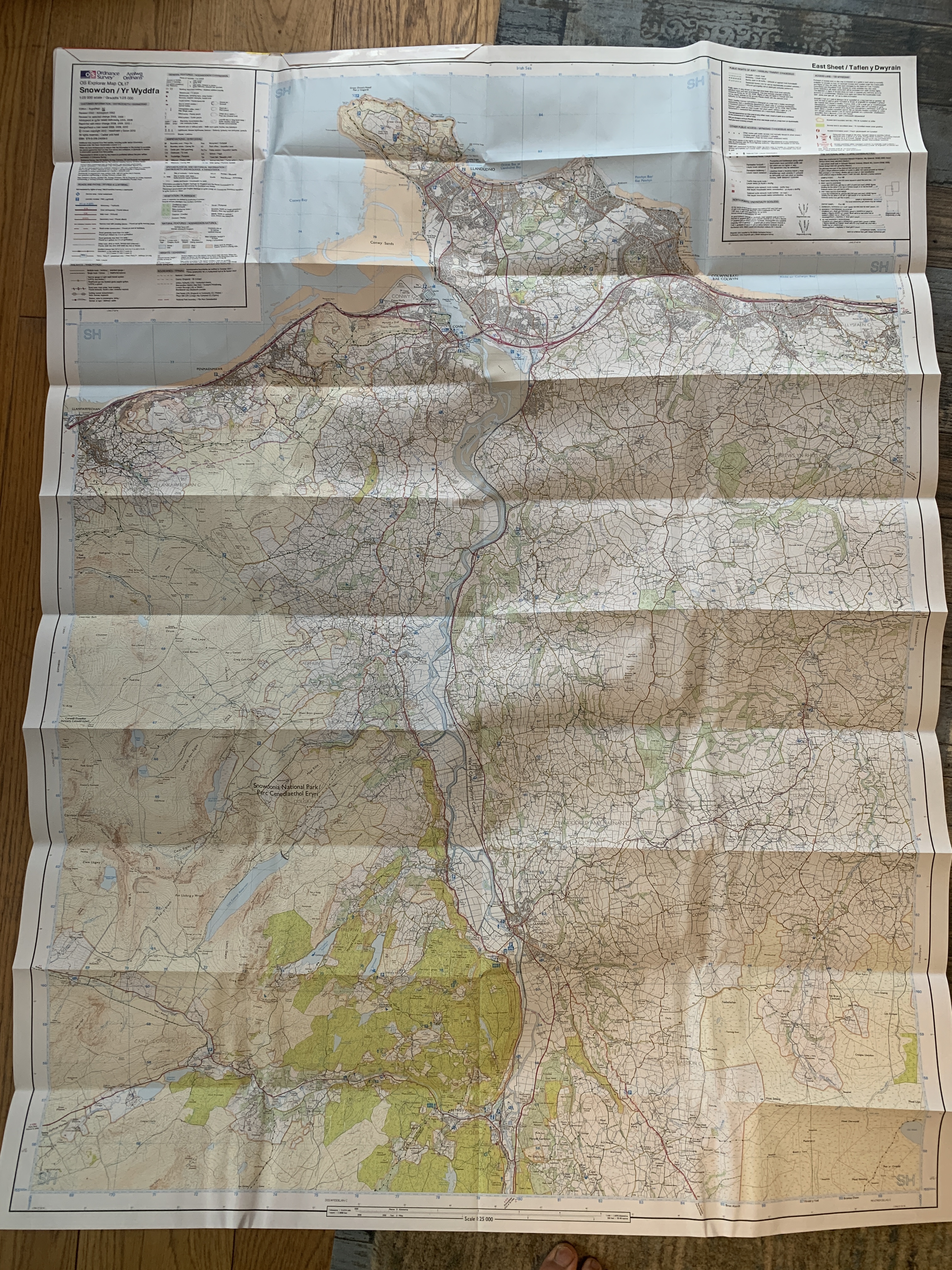
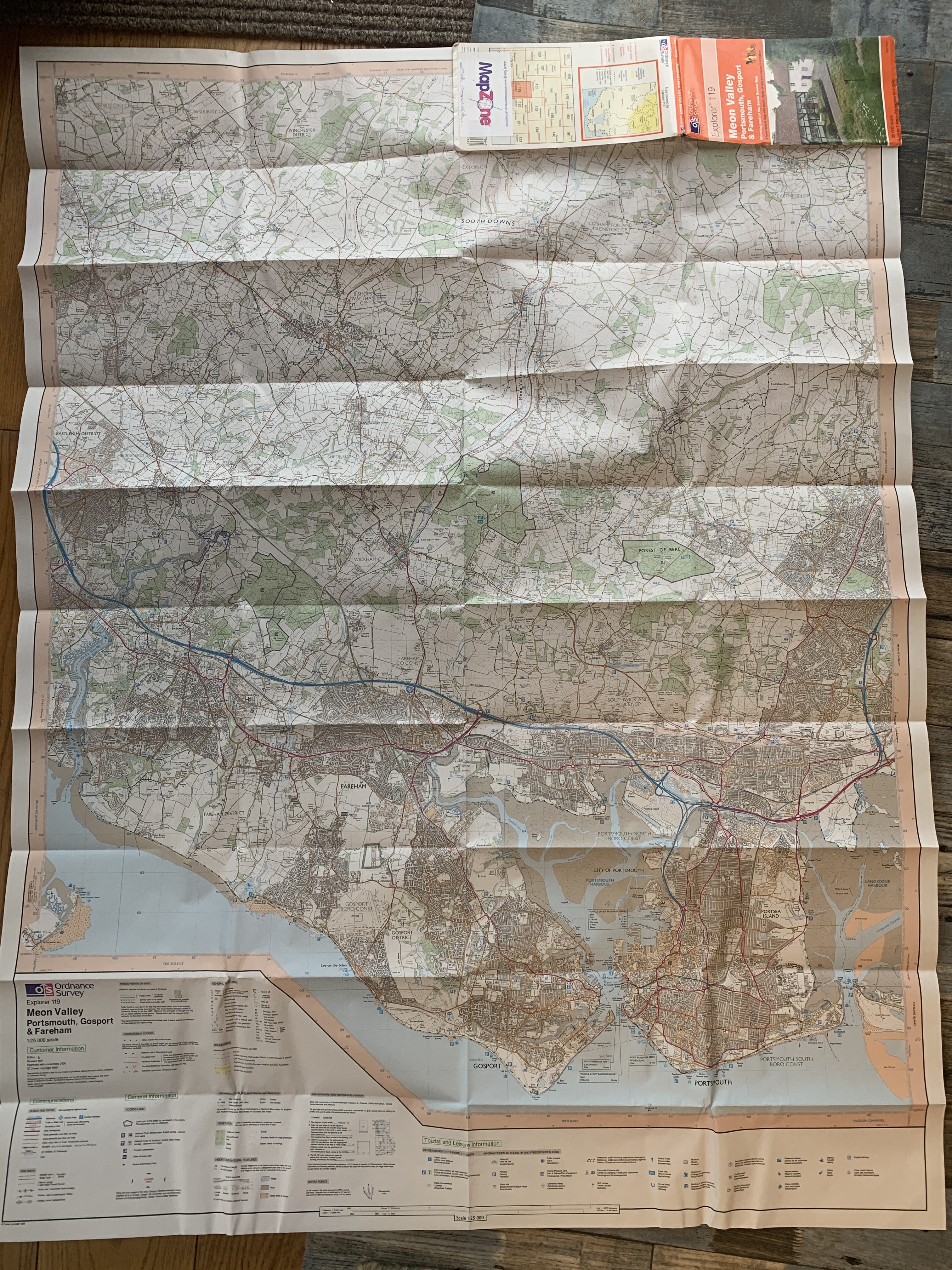
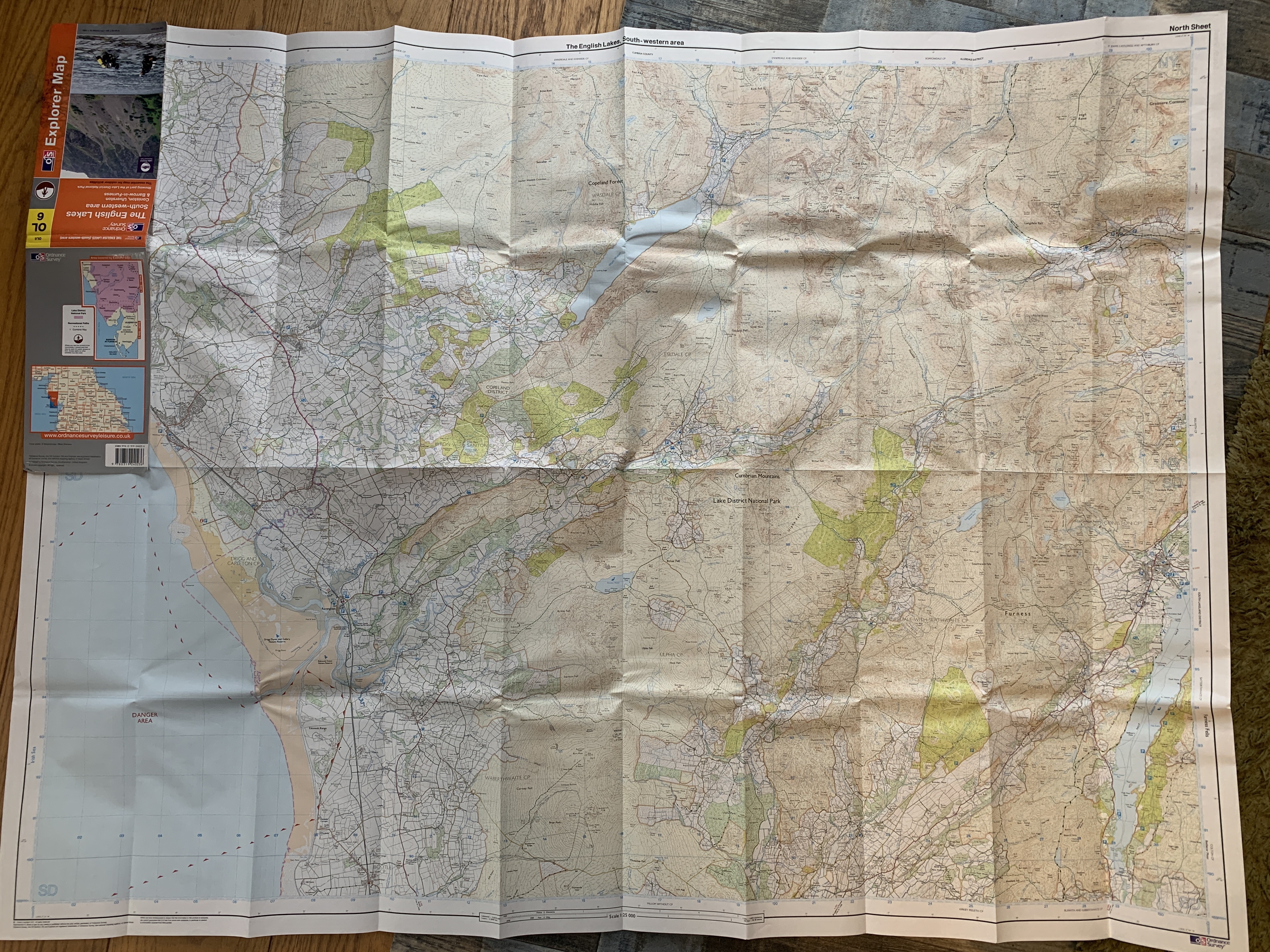
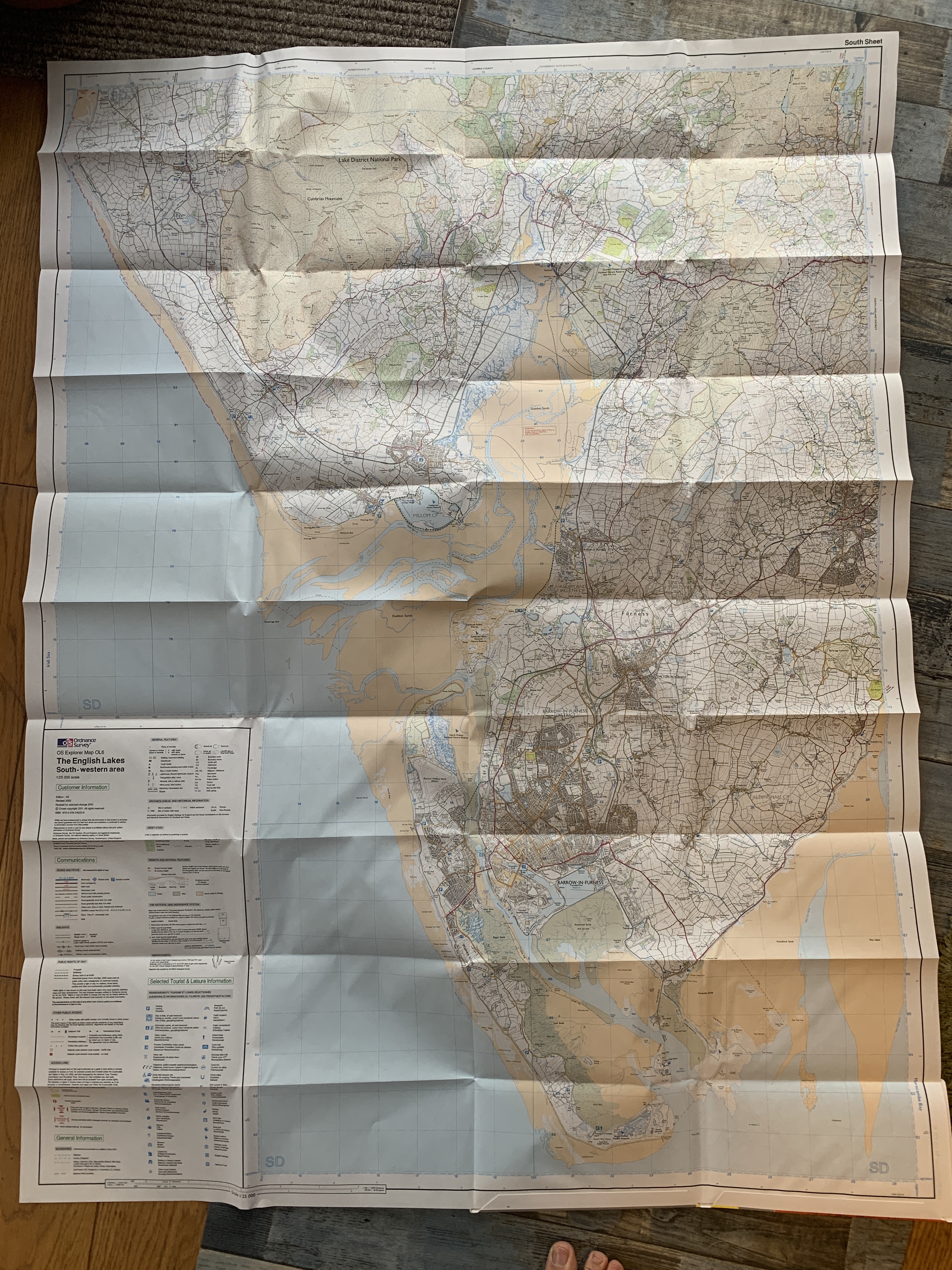
As an initial thought I’ve decided to dig out a selection of OS maps for consideration. The creases and folds in OS maps and the like have always interested me as they work so perfectly. This tiled folded approach feels quite similar to Noemie Goudals work as previously discussed in this post.
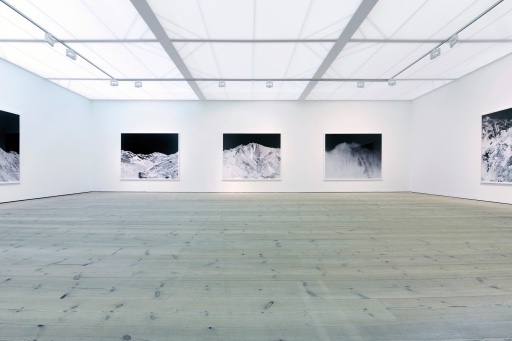
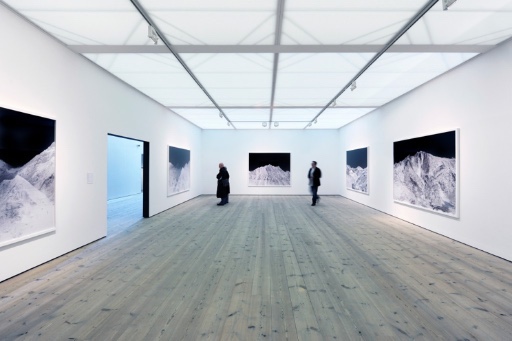
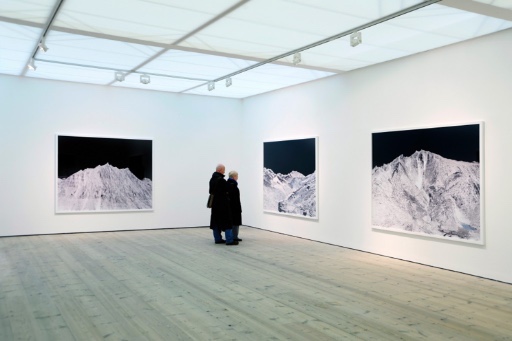
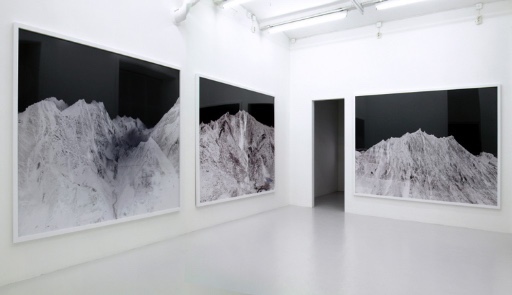
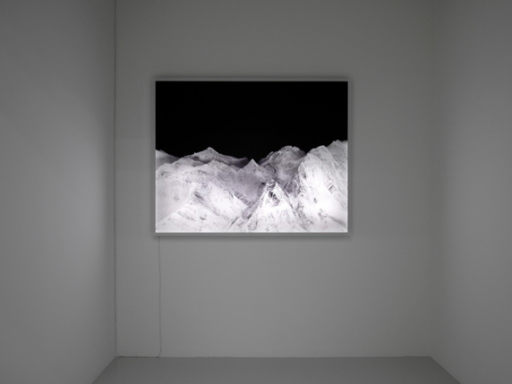
The work of Blackout is made to be big! In these installations views (above) we see how the work lends itself to large scale presentation in often quite sterile places. The size and openness of the BALTIC centre in Gateshead allows the viewer to step back sufficiently to view the works from a distance while also enabling one to go closer for inspection.
In these examples I feel the Gateshead show is far more successful than the example in Stockholm. The smaller room, although making the work more intimate, does not allow one to stand back and admire the work in sequence.
These are just some considerations which are starting points in the road to an outcome. A lot of work is yet to be done but I can feel ideas brewing and coming together.
References:
Haven Her Body Was. (2012). Retrieved from: http://noemiegoudal.com/haven-her-body-was
Jessica Eaton: from 50 shades of grey to the hottest photography around. (2014). Retrieved from: https://www.theguardian.com/artanddesign/2014/jan/24/jessica-eaton-50-shades-grey-photographers-gallery
Beyond Drifting. (2016). Retrieved from: https://www.mandy-barker.com/beyond-drifting-alt
Future Relics. (2018). Retrieved from: https://suzettebousema.nl/Future-Relics
Blackout. (2010). Retrieved from: http://holdsworth.works/dan-holdsworth-blackout
 Andrews Masters Journey