
Following the selection I presented for my Work In Progress Portfolio WIPP during the final tutorial of the module, I decided to go back and make some revisions. Some images have been dropped and I’ve decided to form some combinations of images, previously referred to as concatenations, in the form of diptychs and triptychs.
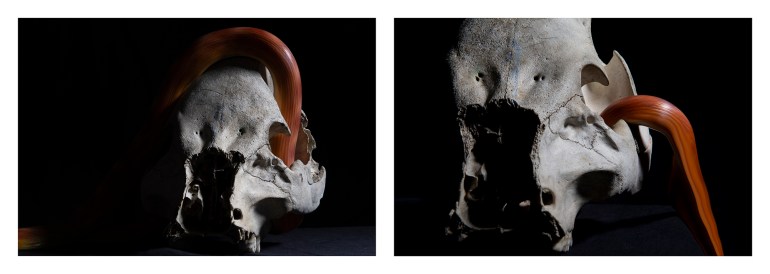
Where some images in the original selection were a bit repetitive I have decided to combine them. The groupings compliment each other and work together as images. Some consideration was put into where in the frame these images would feature and physical posturing of printed images was part of my process (below).


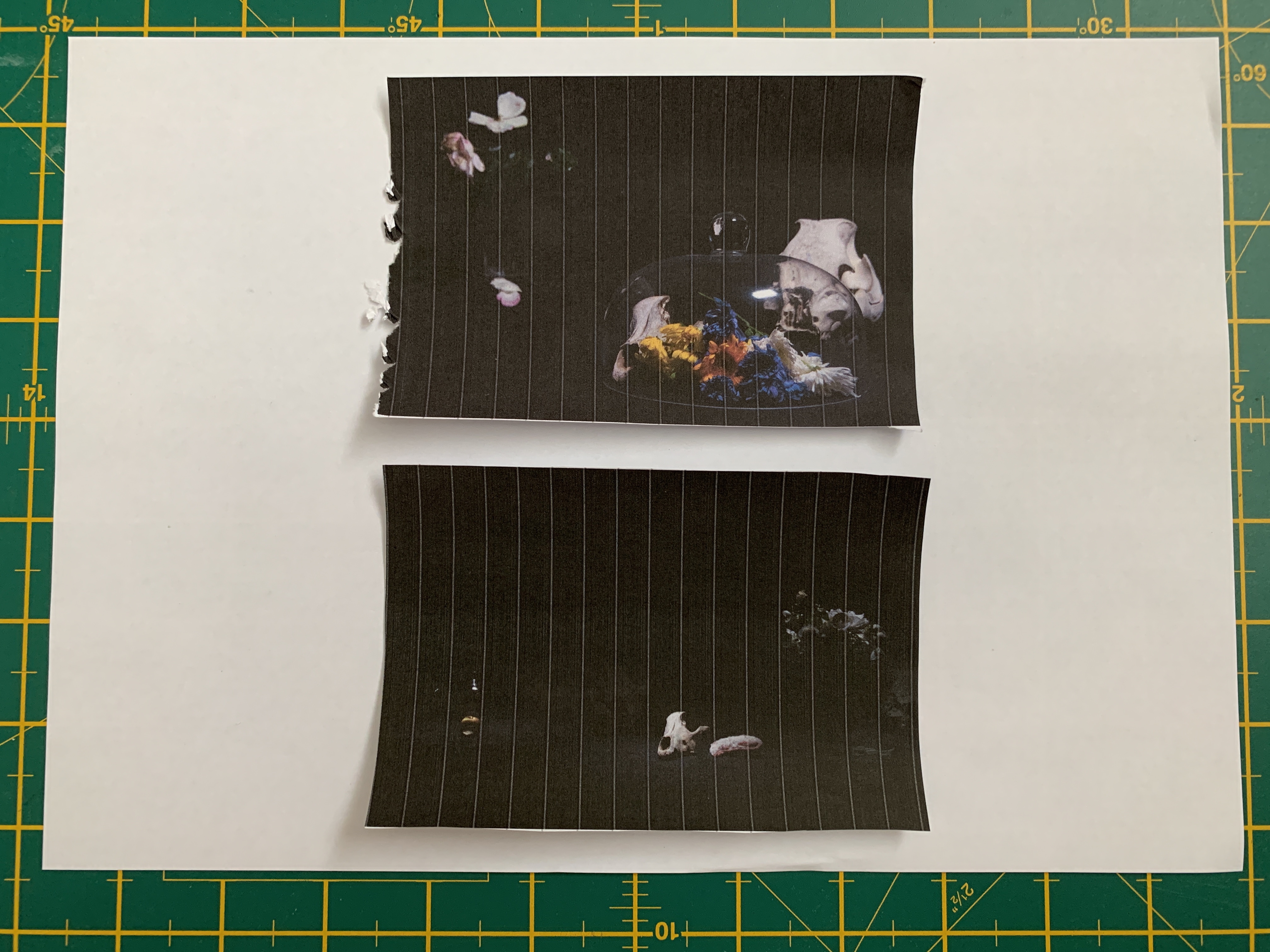
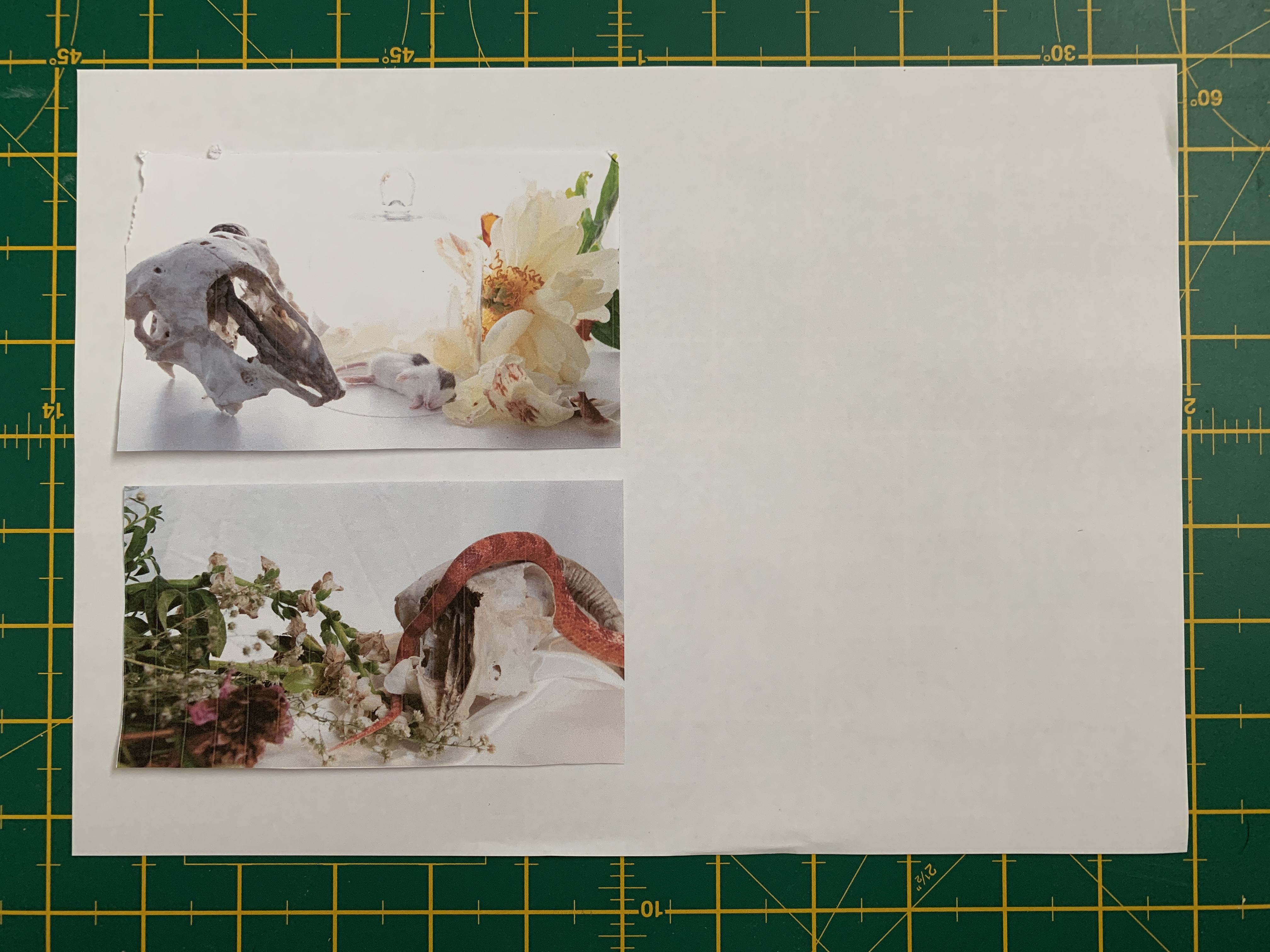
The next gallery consists of three diptychs which have resulted from the process in the above gallery.
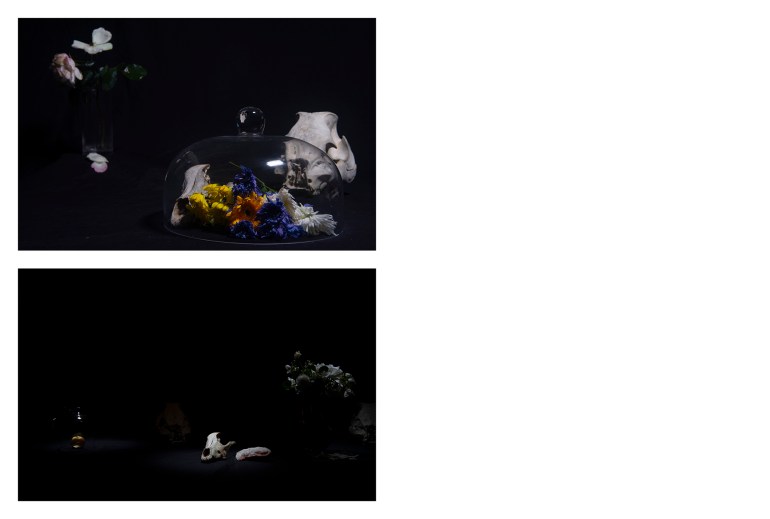
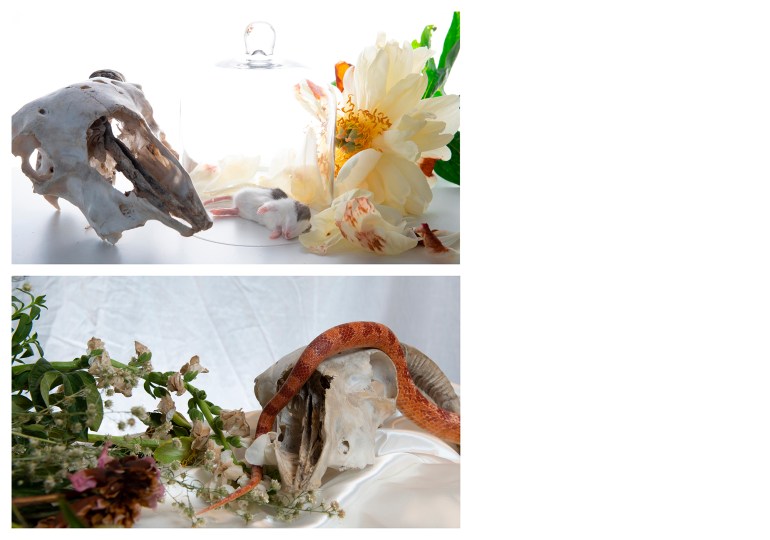
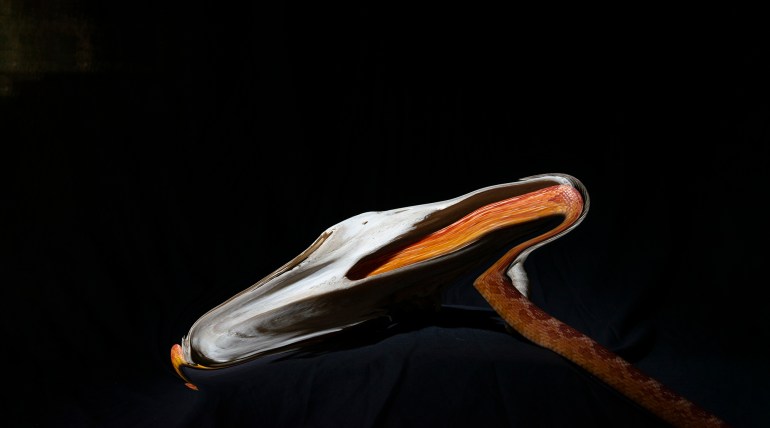
I decided to space images with white as a neutral colour as opposed to grey. I feel these work well and fit well with my methodology. The next images was one I had hesitated over however felt that it works really well with the direction my practice has moved in. The digital distorting of the subject matter pushes our perceptions of ‘still’ and ‘life’. It is at this point where I have arrived at a working title for this body of work of ‘static enthusiasm’. They are primarily words that are synonyms of ‘still’ and ‘life’ but furthermore carry greater connotations of their action. The phrase ‘still life’ carries with it the weight of the history of that ‘genre’ of painting and so ‘static enthusiasm’ pushes my narrative forwards.
The distortions on this image are reminiscent of Dalis’ ‘clocks’ and of Hans Holbein the Youngers ‘The Ambassadors’. This ambiguous nature of the subject matter provokes thought and contemplation.
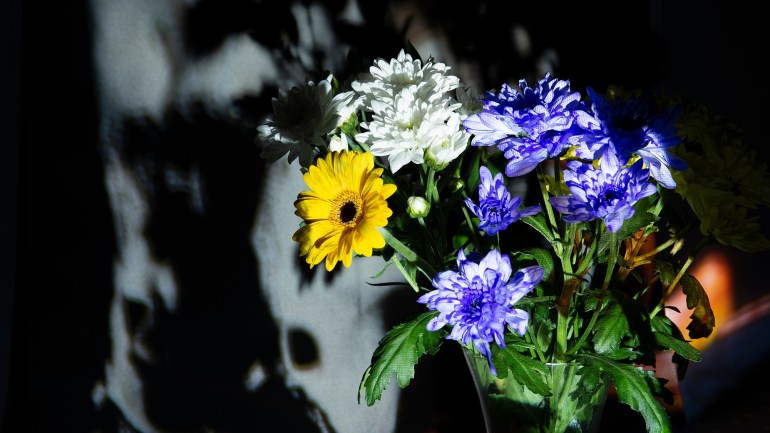
Another image I had hesitated from originally is shown below. It had started out as being a fun experiment with a projector but has morphed into the pairing of two fleeting elements in the frame. The flowers will wilt and die and fade, such is their ephemeral nature. The projection is, likewise, temporary and is gone at the flick of a switch. The temporality of both these elements blend well to form an image which tells its story.
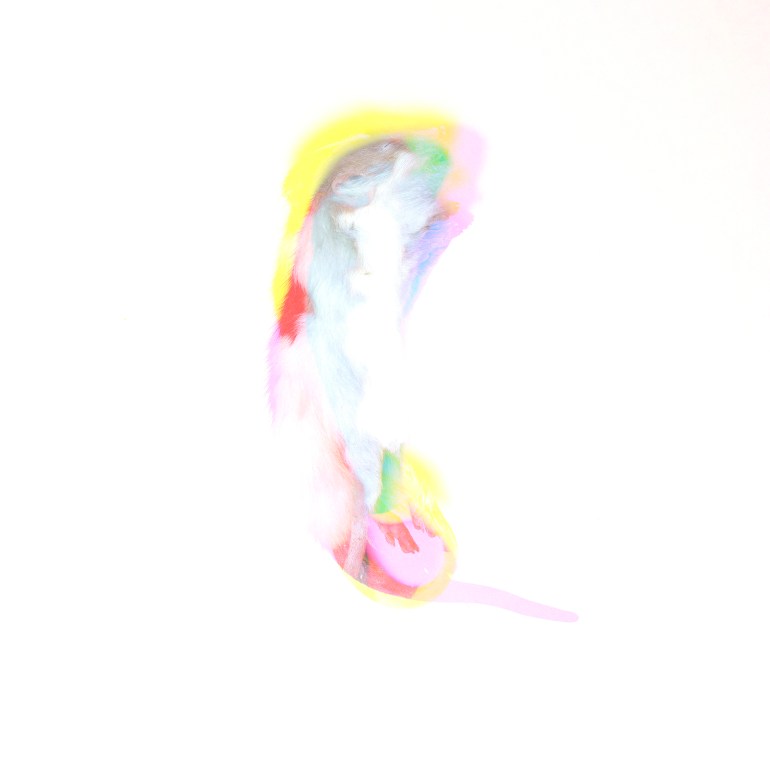
This next image was also an original hesitation until I reflected more deeply upon its possibilities. It comes from a much earlier experiment with deceased rats on coloured papers. These were then stacked in Photoshop and the layer blending mode being altered to change the images appearance. The fading from one to the next through the image emphasises the static state of the rats. Their fading becomes a metaphor for their decay and eventual disappearance.
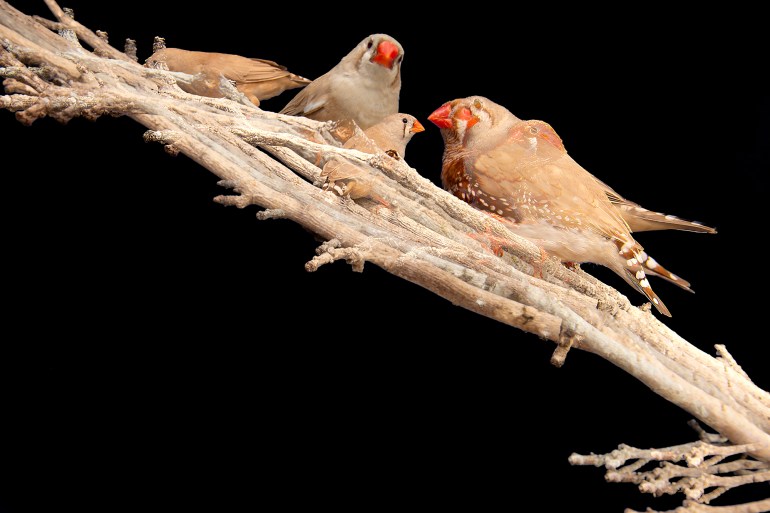
From the week 10 webinar it was suggested that I try placing the birds (originally on white) on black. This made those images fit more securely with the darker feel of many of my images this module. From here I decided to stack the images and alter the blending of them further. The result has been this chaotic but ambiguous representation of their form. Their decontextualisation adds to the surreal nature of the image and questions their representation. Consideration here returns to the work from my research of Sanna Kannisto. Photographing animals in the jungles where they live but by setting up a portable studio. Although it creates a clearer specimen of the subject, it could be construed as misrepresentation of the animals.
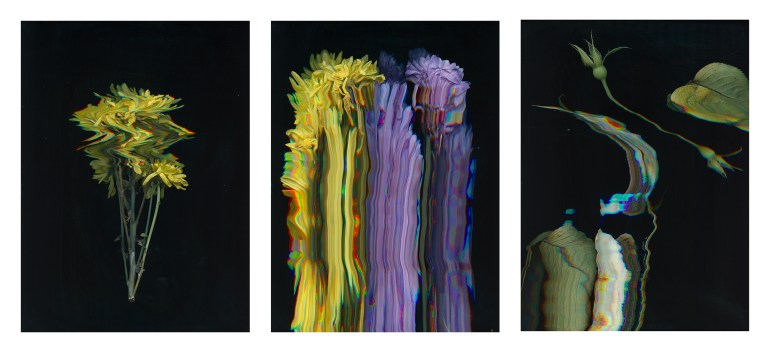
Finally on this post I wanted to display this triptych of images. It was after the tutorial that Laura messaged me to mention she had not seen the scanographs in my WIPP selection. I have no idea why I didn’t consider them for the original selection but here they are. I have maintained the three images from the Landings show. As a conceptual reflection, the subject matter featured within these ‘image’ has its own sense of ambiguous impermanence. The movement of the subject and the resulting image is not visible in a single instance. That movement and the result is also impossible to exactly replicate again. It will be in my next post that I place considerations on possible presentation surfaces and methods for my work.
 Andrews Masters Journey