
Below are the questions and my reflections from this weeks presentation around icon, index and symbol in the visual world.
Do photographs hold more veracity than paintings?
In the main yes, photographs hold more veracity than paintings. As we consider more deeply, and with the advent of the digital era, their validity and veracity reduces.
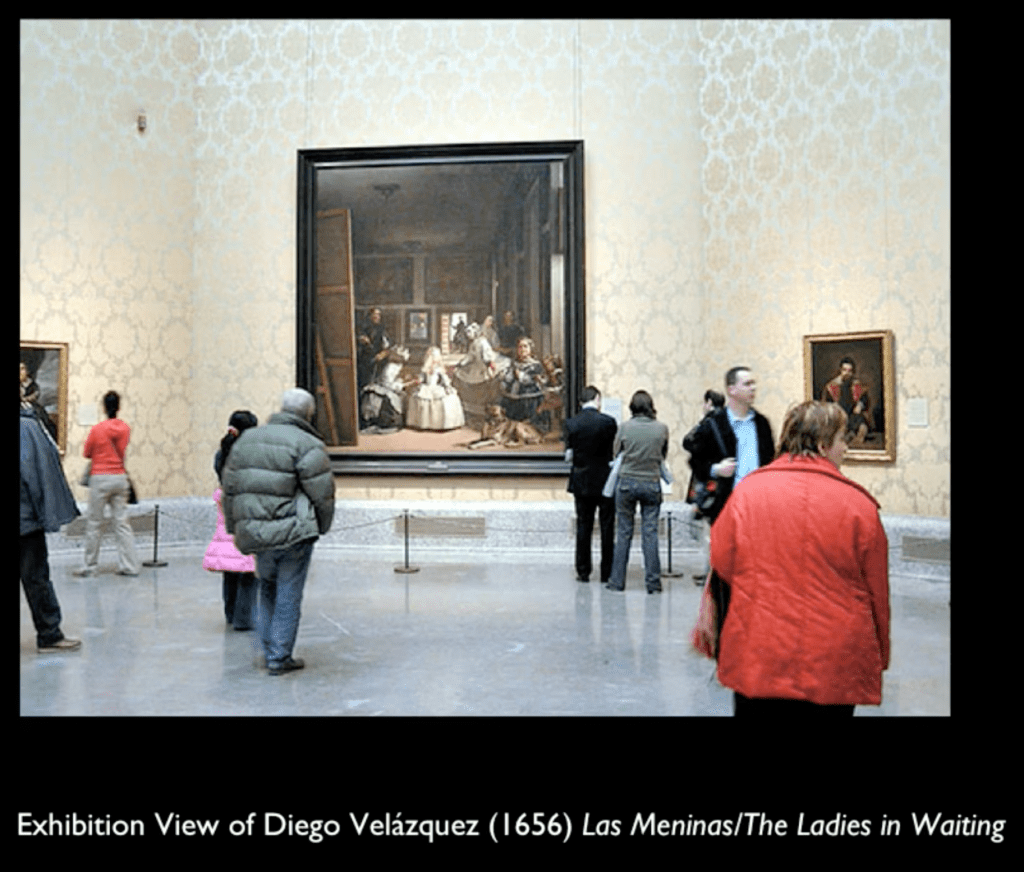
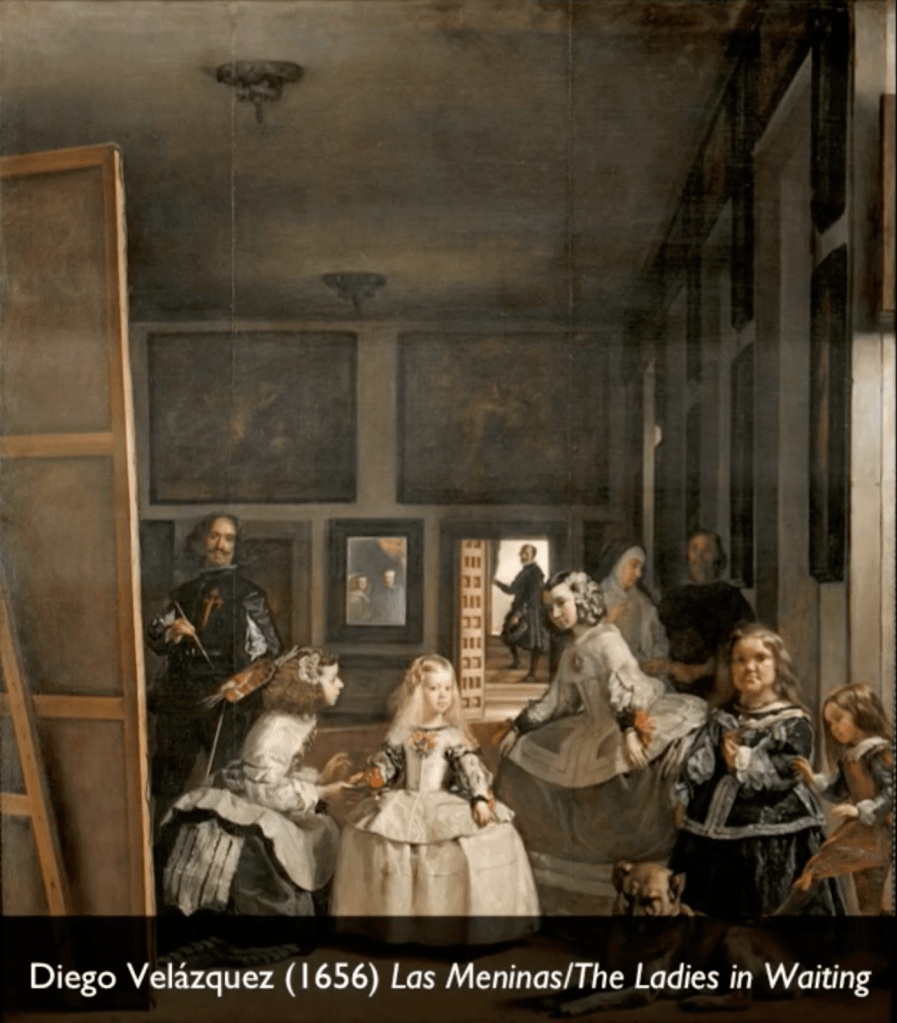
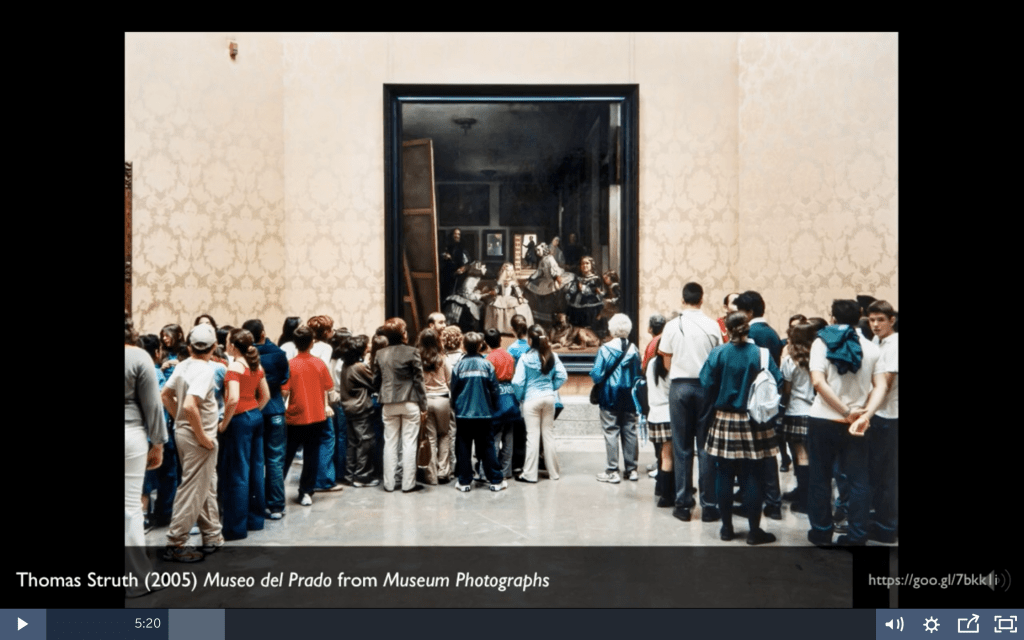
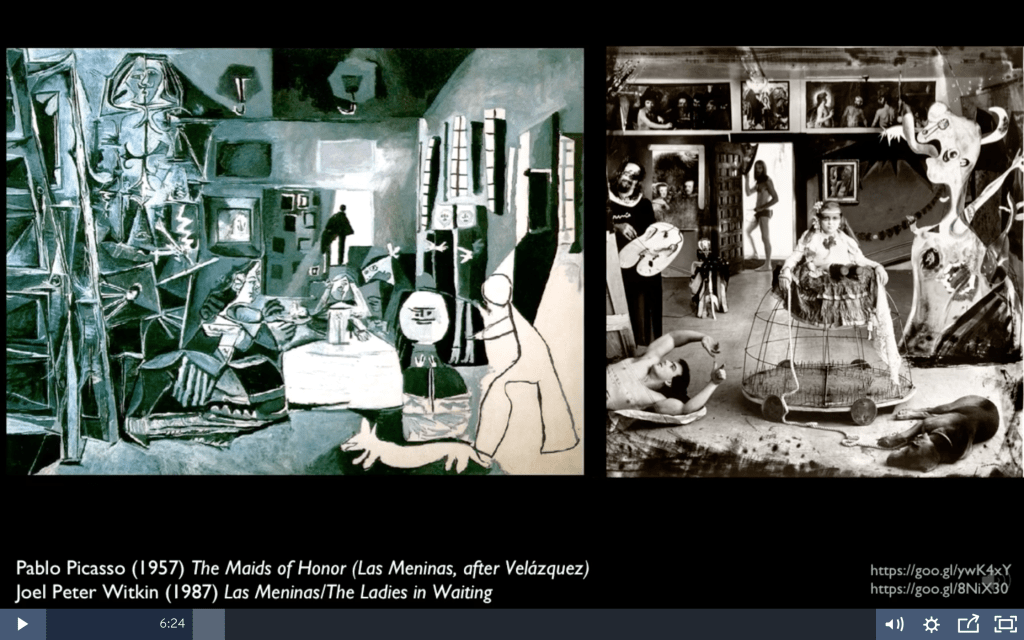
Which of these representations of Las Meninas do you find most authentic?
I find the original painting of Las Meninas most authentic as it is the original article. However, as the presentation goes on to refer to, this is a representation of what the artist saw or what he wanted to show us. This is, of course, assuming that that scene had at one point actually occurred.
Is this aesthetically/contextually specific?
The context of Las Meninas is of particular importance. In a gallery context the painting is layered with additional elements to consider. The wall paper, the height of the painting, the lighting, the paintings position in relation to other works within that room and also, but not limited to, the name of that gallery or wing in which it resides.
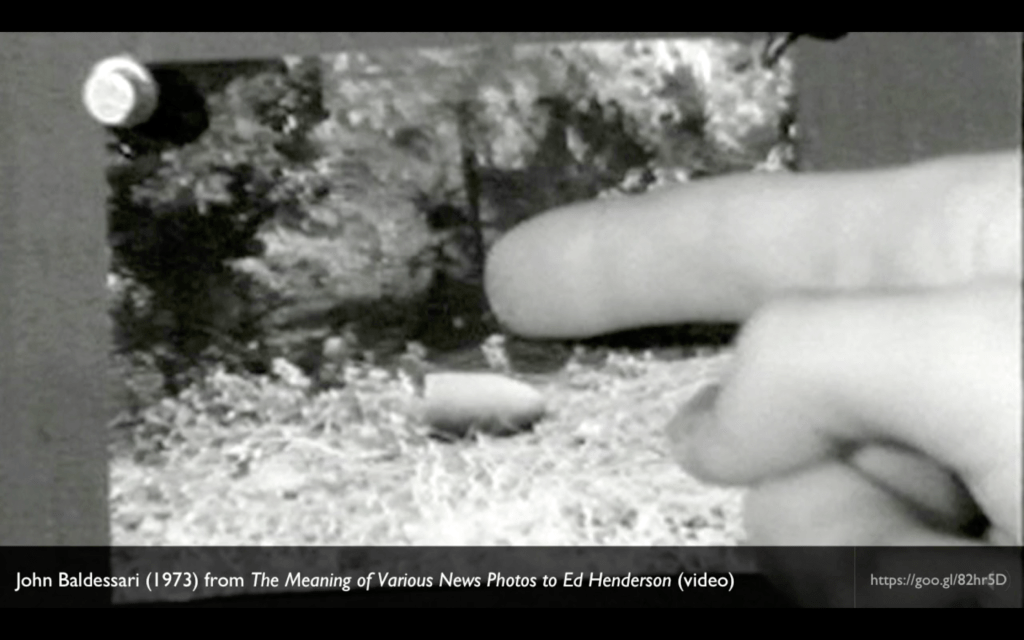
What did you think the subject matter was?
The subject matter appears to be a piece of something larger and it appears to be unnatural. Possibly part of a car.
What did you think it was about?
The scene appears to be more of a crime scene image or is quite similar to images that people propose to be of ‘big foot’ or the ‘abominable snowman’.
Is there any ‘certainty’ in your work?
There is some level of certainty in every image or body of work. What that certainty is depends greatly on the audience or person viewing the image and their own experience of the world.
Do you agree with Snyder and Allen’s critique of the visual model?
I agree to a certain extent. Photography is still largely felt to be proof or evidence of a thing. However many of these texts were written in the 60’s/70’s or 80’s before the digital era truly took hold. The levels of technology in the 21st century is such that whole photographs can be manipulated out of their reality and into entire falsehood.
Do we expect photographs to be iconic?
Many expect photographs to be iconic, and to a certain extent they are, however the complications of the digital era play a significant role as outlined above.
Is this important to your own practice?
In much of my past practice being iconic has been a critical element to what I have done. With much of my work revolving around documentary photography and capturing the ‘real world’ to show others or bring attention to means that being iconic is core.
In my practice on this MA, so far it has been but as I move towards still life practice the validity of what is before the camera is called into question. Yes that scene would have been real before the camera at some point but that scene is an entire construction.
What do these cases say about photography in context?
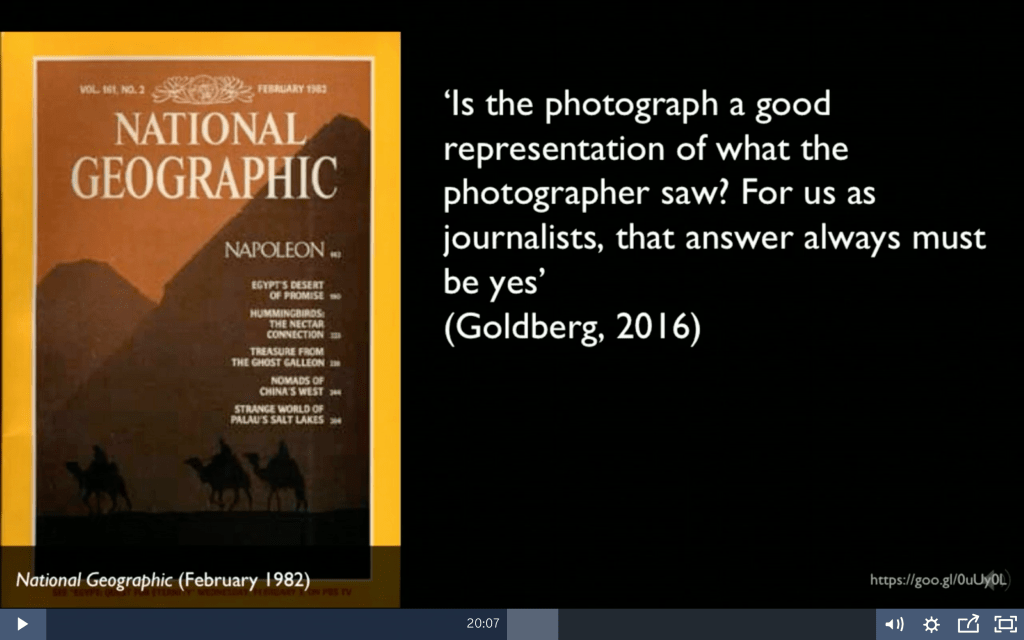
Photography in context is everything, without context they are open and broad, context refines and narrows the meaning of the photograph into where the maker or distributer desires. With the exception of the wolf image, all of these images fit into a journalistic environment where their context is even more important.
Do these manipulations really matter?
I feel that the moving of the pyramids to fit the cover orientation is less deceiving than the commissioning of the camel riders to move through the scene repeatedly to obtain the ‘right’ image.
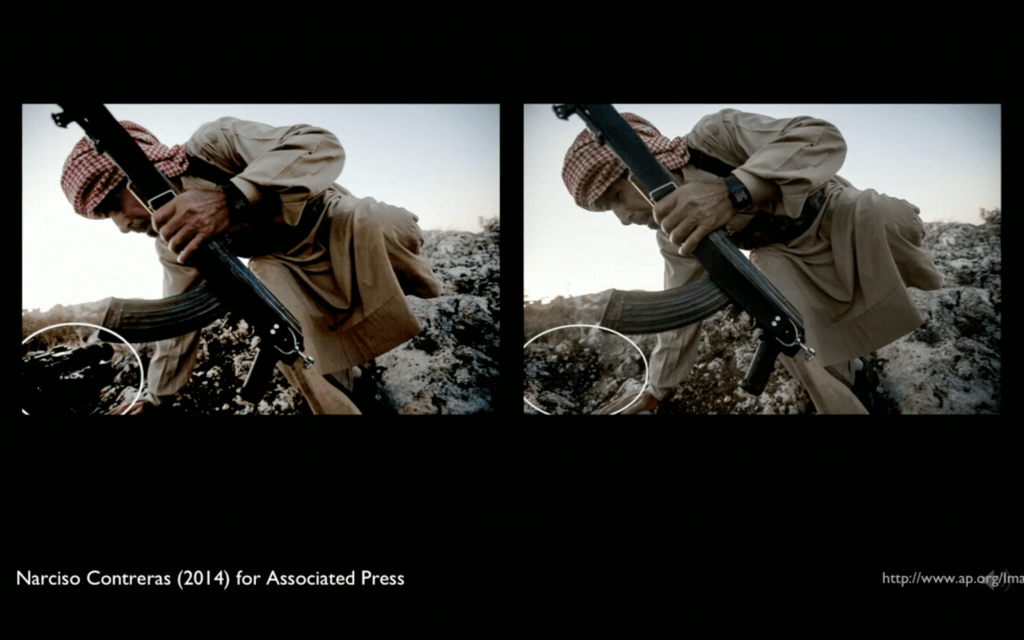
The removal of the camera in Contreras image doesn’t effect the context or the message of the photograph but matters as a principle of journalistic integrity.
The wolf is by far the most troubling of these manipulations. The deception is great and flies in the face of the efforts of other competitors in the competition.
Does it really change the way we read these images?
On face value we buy into the truth of these images and don’t question them. With the additional information we obtain different context and so the way we read these images alters greatly.
Aren’t all photographs constructions and visual choices?
Every photograph contains constructions and visual choices. From the decision to photograph from a standing position because it is your ‘normal level’ is a construction and a visual choice. There is no such thing as an objective photograph although photography is far more objective than painting.


Do you think indexicality is important for photography?
In true photography indexicality is crucial. The cause and effect relationship within photojournalism and documentary photography for example is the difference between success and failure of the image. In what I would term as ‘pretty picture’, indexicality is not as important although it does still exist.
Are all photographs constructions?
All photographs are constructions. Every element of a photograph is considered, even if taken on an iPhone. On an iPhone there may be less control over aperture/depth of field, shutter speed, ISO etc but one still has control over how and where it is pointed. The height you choose to stand at, the positioning of items within the frame etc. The resulting exposures are the end product of many considerations; trained or not, aware or not.
In what ways do you ‘construct’ in your practice?
In my practice before the current project shift construction in my practice has occurred in many ways. In my A Road Petrol Stations at Night images every element was constructed. The distance from the subject, the choice to shoot at night, the positioning of the subject lower in the frame and the use of open camera technique to name a few. In my current practice with still life photography the constructions are a lot more evident. Building the scene, lighting arrangement, choice of camera, choice of film, choice of exposure etc.
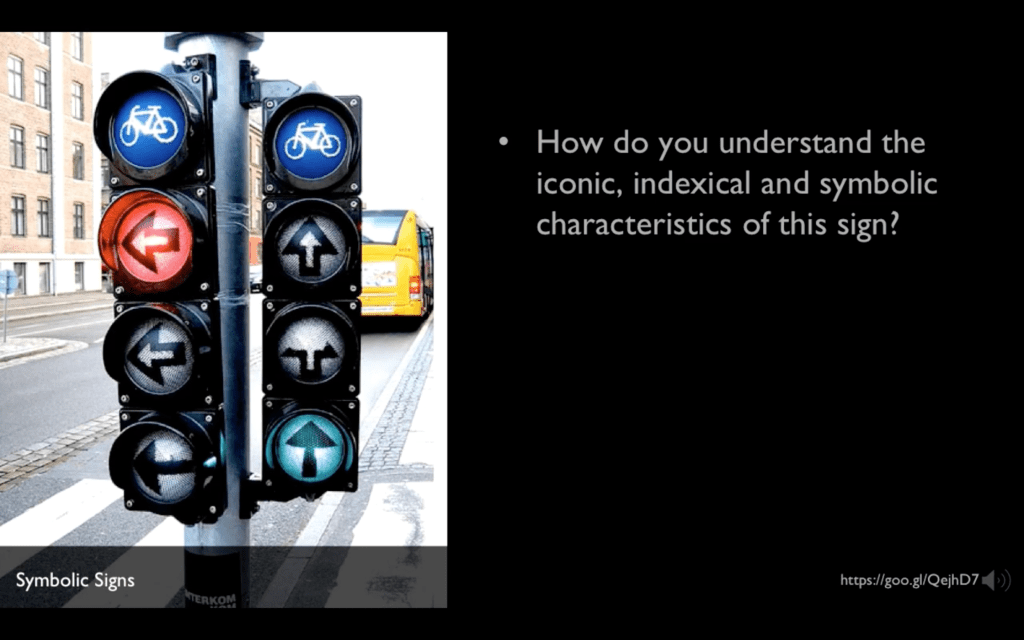
How do you understand the iconic, indexical and symbolic characteristics of this sign?
The icon of the bike signifies that that light is for cyclists while the red and green arrows in their respective directions are symbolic of stop and go in the direction that the arrow, an icon, indicates.
How do you respond to Snyder and Allen’s comments regarding photographic vision?
Like many photographic texts, the writings of Snyder and Allen are quite dated. Being written in 1975, the text in question holds photography as all honest and above criticism. This neglects the advent of the digital era and the ease to which photographs can be manipulated and sculpted for the creators or the disseminators bidding.
How did these ideas and visual practices inform your reflections of a presumed photographic veracity?
I have not been in two minds about the veracity of photography. I have always questioned the validity and genuine nature of the image.
Where is the iconic, indexical and symbolic photograph now?
With the era we live in as it is images are far more fluid than they have ever been. Despite this, iconic, indexical and symbolic still have their place in photography today.
Where are you now?
I feel invigorated to place greater consideration into the indexicality of the photographs I create as this course progresses.
 Andrews Masters Journey