Essentially the still life painting has been a feature of the art world for as long as humans have been rendering what they see onto canvas. Despite this, still life as a genre has only really entered acceptance in the art world in as recently as the last 300-400 years. In this post I will showcase a selection of works from a variety of artists and attempt to read the symbology of the content of the image. I feel that starting with paintings and their interpretation of the still life is important before advancing into the world of photographers with that practice.
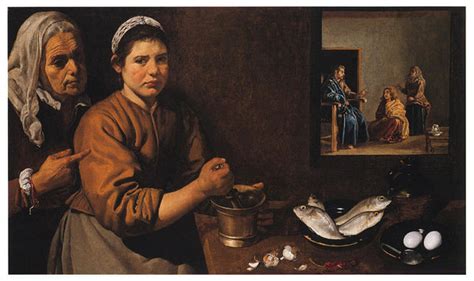
Although this image features present human form, it is a starting point in reading the symbolism featured in art. A young servant girl is shown crushing garlic to serve fish while on a second plate sit two eggs. Fish are a common feature in religious symbology with their link to Jesus’ feeding of the 5000. Meanwhile eggs are a common symbol of fertility and new life, seen most commonly at Easter with the giving and receiving of chocolate eggs.
The scene is dark and would likely have reduced natural lighting due to the ‘out of the way’ nature of servants and kitchens. The golden feel of the image could be supposed to come from candle light being used to illuminate the scene.
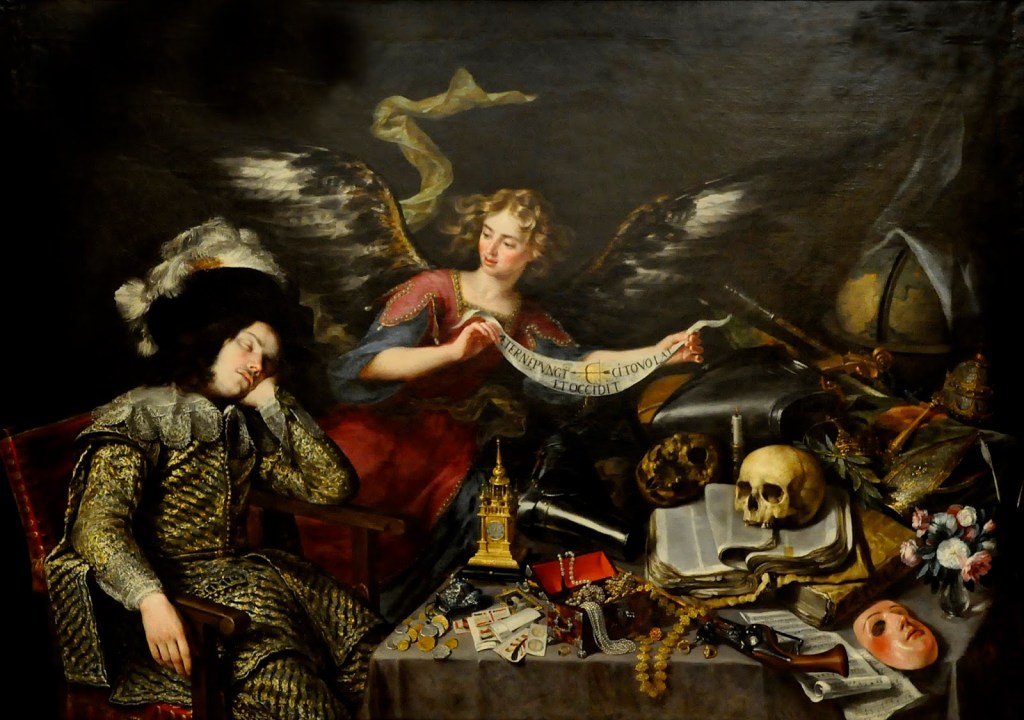
The Dream of the Knight features a nobleman who is asleep. On the table before him sit many treasures and earthly possessions. An angel features in the background seeking to draw the knight away from his life of early commodity in search of a simpler life. On the table sits a human skull. Skulls, rather logically often symbolise the fragility of life and the easy transience from life to death.
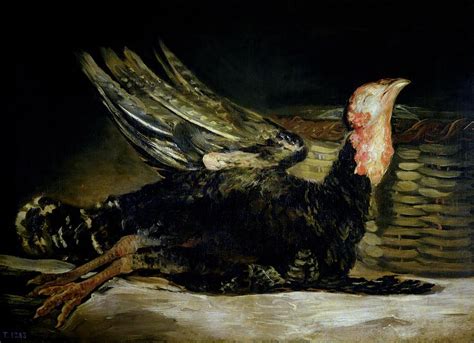
As with many Goya works, death and dead animals are common place. Many of these placements form memento mori, the reminder to the viewer of mortality and the fragility of human life. Naturally, with this subject matter, a darker light treatment is necessary.
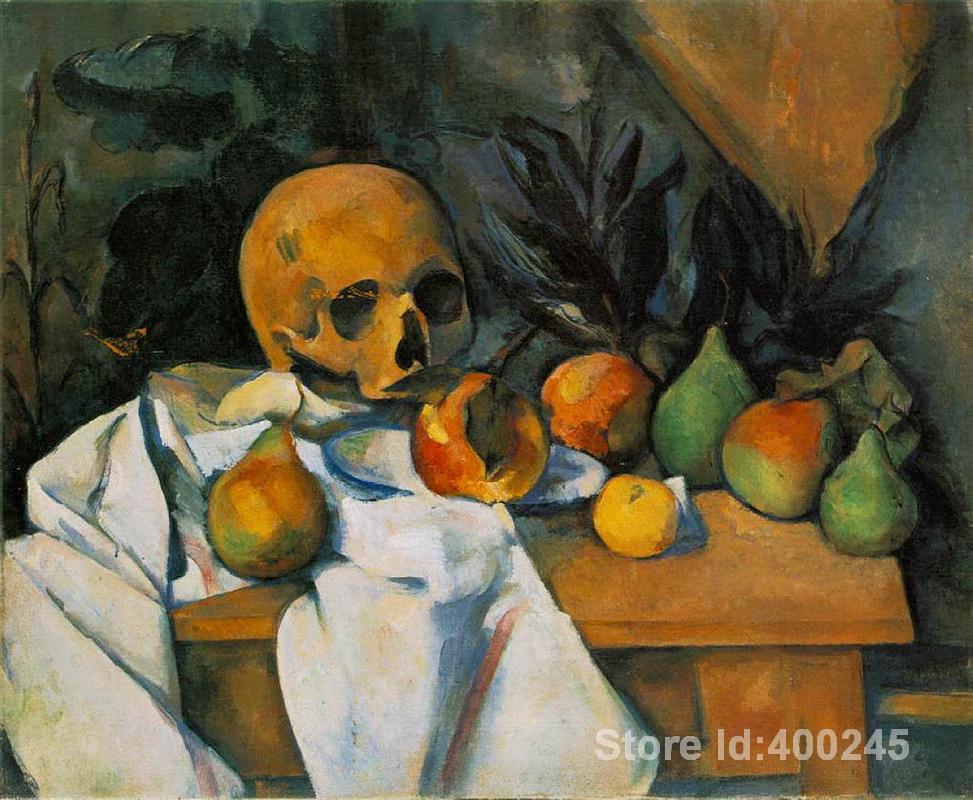
Cezannes depiction above combines a skull with fruit. The ephemeral nature of fruit and it’s accompaniment with the symbol of human fragility creates a scene which conveys the balance between life and death.
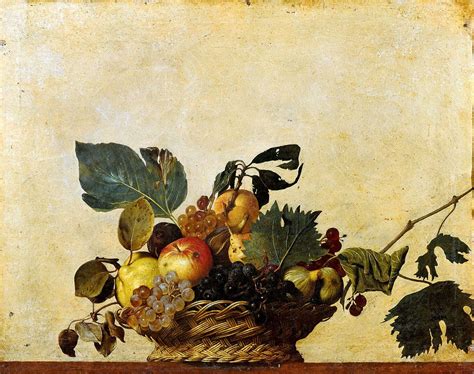
Caravaggios’ composition of a bowl of fruit is set against a light background. The scene is well lit and features apples. Apples being a common symbol of knowledge but also the forbidden fruit for which Adam and Eve are cast out of the garden of eden for consuming.
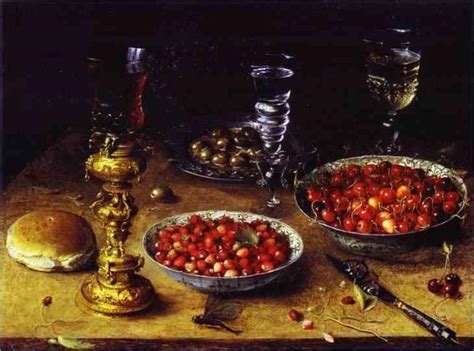
Beerts’ scene, above, displays cherries and strawberries and a dragonfly in the foreground. The fruit symbolises the souls of men while the dragonfly represents the devil waiting to corrupt them. The scene features darkness moving through the background with objects fading into this darkness.
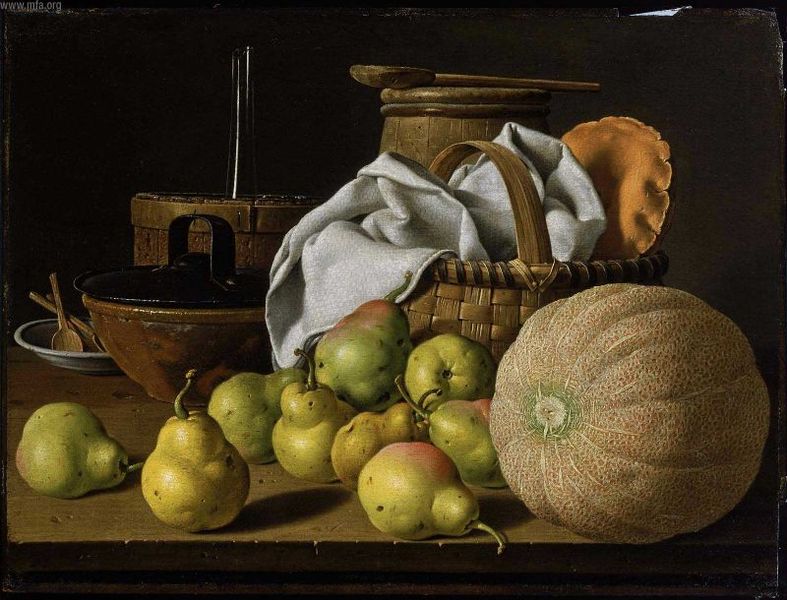
Luiz Meléndez 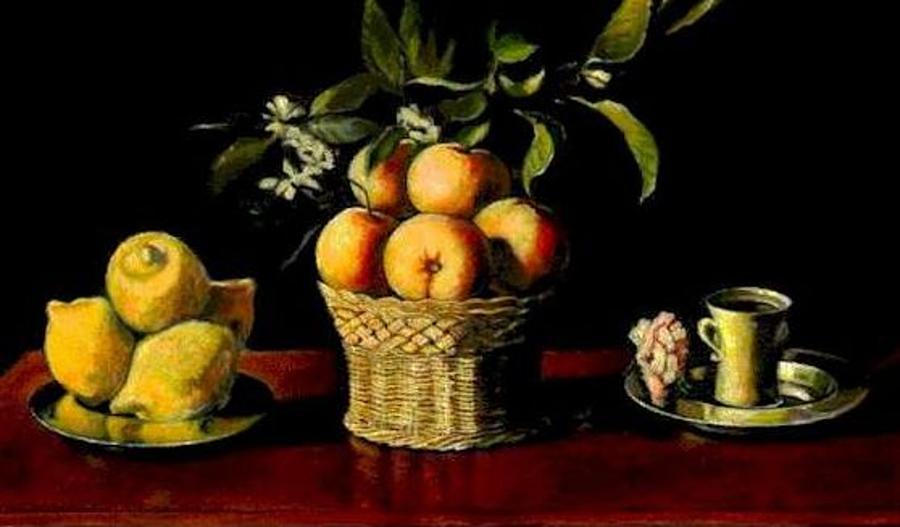
Zurbarán 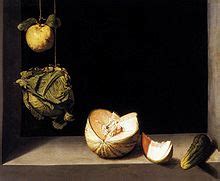
Juan Sánchez Cotán
Many still life paintings from across the centuries feature floral compositions. Flowers as a subject have been visited by artists and photographers alike for generations, indeed many of the first prints by Henry Fox Talbot were contact prints of plant life. As a subject matter, flowers and plants are ephemeral and deteriorate and wilt in time. Their form is desirable and popular amongst artists across mediums.

Jan Brueghel the Elder 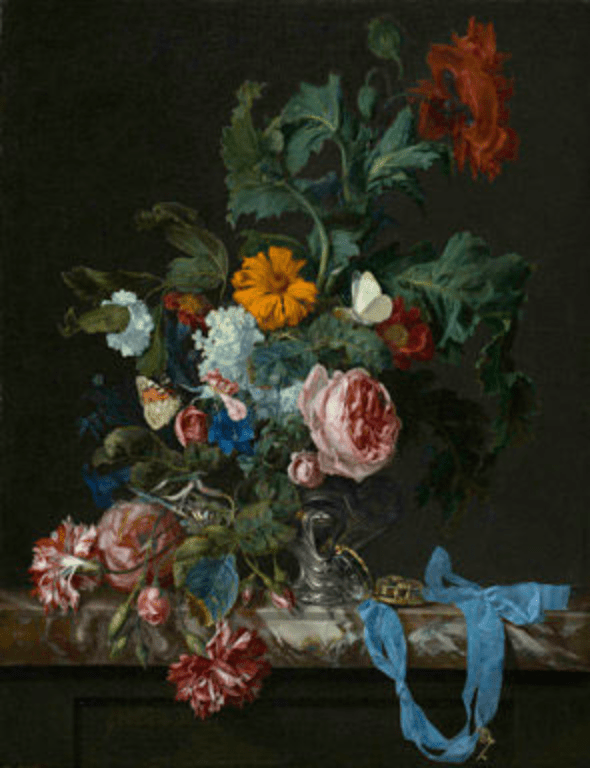
Willem van Aelst
When making my own explorations with still life photography it will be essential to place deep consideration into the composition, lighting and content of the images I create.
 Andrews Masters Journey